REVIEW · FREDERICK
Harpers Ferry Audio Tour History, Ruins and River Views
Book on Viator →Operated by Drives & Detours · Bookable on Viator
Civil War brick, river views, and a self-paced story.
I love how the app helps you time your walk by starting audio when you reach key spots, and I also love the mix of John Brown’s Fort with big overlooks and river junction views. One drawback to plan for: the route has real climbs, so comfortable shoes and a patient pace are smart.
This is a mobile, English-language tour built around 19 stops across Harpers Ferry’s Lower Town and the hills above it. You get a guided feel without being rushed, and the best part is that many stops are free to enter, so your $9.99 mainly pays for the narration and smart stop-by-stop timing.
You do need to bring your own smartphone, and cell service can be spotty—so download before you go. Do that, then you can walk at your speed, pause when you want, and still keep the story moving in the right order.
In This Review
- Key highlights you’ll feel fast
- Price and pacing: $9.99 for a 2-hour, self-guided story
- How the app tour works when service is spotty
- Stop-by-stop in Harpers Ferry: from the Appalachian Trail midpoint to the river junction
- Lower Town start point and the rail legacy (Lower Town Train Station)
- The Appalachian Trail Conservancy Headquarters (Stop 1)
- A crucial museum stop that’s currently closed (Stop 2)
- Harper Cemetery (Stop 3)
- US Armory Site (Stop 3)
- Harpers Ferry Historical Museum (Stop 4)
- Jefferson Rock (Stop 5)
- John Brown’s Fort (Stop 6)
- Lockwood House (Stop 7)
- St. Peter’s Roman Catholic Church (Stop 8)
- Storer College Campus (Stop 9)
- River junction viewpoints: the land at the center of trade and strategy
- The Point (Stop 10)
- Virginius Island, West Virginia (Stop 11)
- Lower Town gathering spots and the town loop you’ll finish back at
- White Hall Tavern (Stop 12)
- Murphy Farm (Stop 13)
- Bolivar Heights (Stop 14)
- Harpers Ferry Public Square (Stop 15)
- Lower Town Train Station (Stop 16)
- The origins and the dramatic climb: where the ferry began and how the trail cuts up the cliff
- Original Site, Shenandoah River Bridge (Stop 17)
- Appalachian Trail Staircase (Stop 18)
- Arsenal Square (Stop 19)
- Practical tips to make this tour feel easy (not exhausting)
- Should you book this Harpers Ferry Audio Tour?
- FAQ
- How much does the Harpers Ferry audio tour cost?
- How long is the tour?
- Where does the tour start and end?
- Do I need to bring a smartphone?
- Can I download the tour ahead of time?
- Is the tour in English?
- Are there admission tickets at the stops?
- Is this tour private for my group?
- What if I need to cancel?
- Are young children free?
Key highlights you’ll feel fast
- Audio that cues you at the right places so you’re not guessing what to look at next
- Free admission stops mean you’re paying for the story, not ticket stacking
- Appalachian Trail connections at the midpoint hub and the dramatic stairway up the cliff
- Two major themes in one loop: abolition-era conflict and post-war education
- Viewpoints with meaning, from The Point river junction to Bolivar Heights
- Expect hills and stairs, including cliffside lookouts and an actual uphill climb
Price and pacing: $9.99 for a 2-hour, self-guided story
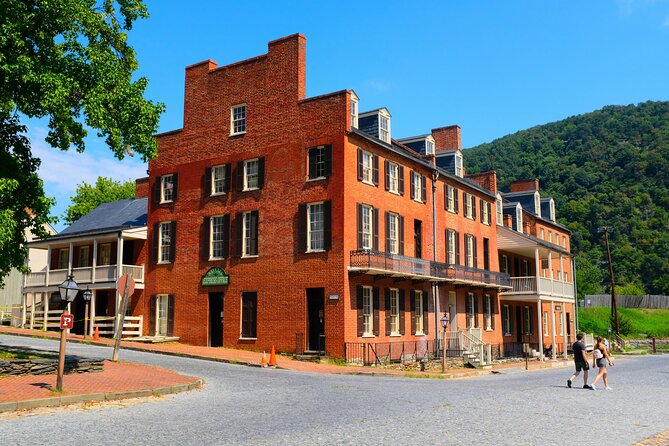
At $9.99 per person for about 2 hours, this tour is priced like a practical add-on to a walk you’d probably do anyway. The value comes from two places: first, you’re not paying separate admission fees for most stops; second, you get an audio guide that points your attention to what matters at each location.
Because it’s self-guided, you’re not stuck with someone else’s speed. If you like reading interpretive markers and then switching to audio for the “why this matters” context, this format works well. The tour is also listed as available every day during a long seasonal window (8:00 AM to 8:00 PM), so it fits both early-day and late-afternoon visits.
The main pacing reality: you’ll be walking between Lower Town and higher overlooks. Reviews included hints about awkward walking distances and a wish for easier transport, so treat this as an active walk, not a flat promenade. If you’re the type who likes frequent sit-down stops, build in breaks.
How the app tour works when service is spotty
This runs through an app on your smartphone, with a mobile ticket and audio guide. You’re expected to download the tour before you arrive because cell service is spotty at best. I strongly recommend doing the download while you still have solid Wi-Fi, then testing volume and playback before you start walking.
A key feature is location-based audio: you reach a stop, then the narration kicks in (and yes, you can simply push start and go from there). That helps you avoid the most common self-guided problem—standing in the wrong place and feeling like you’re missing the point.
There’s also an on-the-go correction built in: if you get turned around, you can return to the map view quickly from the app interface. The only caution: some users found the interface less friendly for finding the map and starting at points other than the intended sequence. If you want the cleanest story flow, start at the Lower Town Train Station and follow the route in order.
Stop-by-stop in Harpers Ferry: from the Appalachian Trail midpoint to the river junction
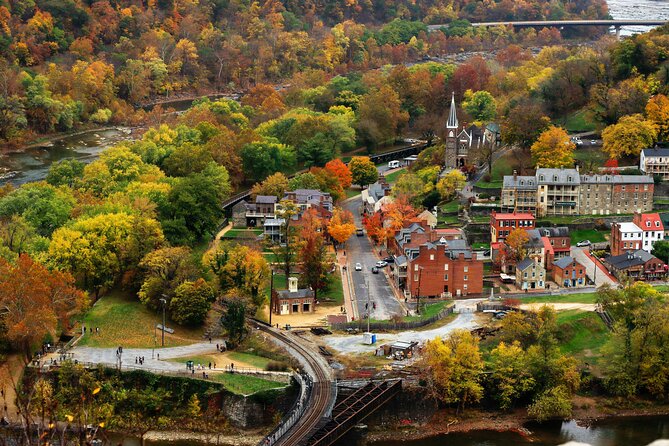
Lower Town start point and the rail legacy (Lower Town Train Station)
You begin at the Lower Town Train Station, 182 Potomac St, Harpers Ferry, WV 25425. Even if you’ve never been here before, this start point gives you a foothold: the station is a reminder that Harpers Ferry wasn’t just a battlefield town—it was also a real transportation hub.
The tour also includes this station again later, so you get a natural “loop back” feeling. If you’re tired, it’s a comfortable place to regroup and check your progress before continuing.
The Appalachian Trail Conservancy Headquarters (Stop 1)
At the Appalachian Trail Conservancy Headquarters, you’re stepping into the heart of the 2,190-mile Appalachian Trail at its symbolic midpoint. This stop doesn’t just talk about hiking—it frames the trail as an ongoing community, not a one-time adventure.
It’s a nice breather early in the tour because it shifts your mind from Civil War drama to the way the land is used and protected today. And because it’s only about 10 minutes here, it keeps you on track.
A crucial museum stop that’s currently closed (Stop 2)
Right after that, you’ll reach a museum focused on the stories of African Americans in Harpers Ferry—covering enslaved life, freedom, education, and resilience. The key planning note: it’s currently closed for renovations.
That means your experience at this stop may be limited to what you can view from outside or nearby, and the narration may still prompt you to understand its themes even if you can’t go inside. If African American history museums are a top priority for your trip, you might want to confirm current status before you plan a day here.
Harper Cemetery (Stop 3)
Next up: Harper Cemetery, high above town. This is where the audio tour earns its keep as a views-and-stories pairing. You’re surrounded by quiet, but the place is also heavy with meaning, with resting places for soldiers, citizens, and visionaries who shaped Harpers Ferry’s identity.
I like this stop because it slows you down. You can look out over the town and river corridor, then listen to the human side of what happened here. It’s a good “reset” between major sites.
US Armory Site (Stop 3)
Then you’re at the US Armory Site—once a major U.S. weapons factory. Today, only foundations remain, but the location matters because this is where John Brown’s raid became a flashpoint.
This is one of those stops where the audio helps you “see” what isn’t there anymore. You’re not standing in a full building; you’re standing in a footprint with an explosion of consequences attached. It’s worth paying attention to the explanation because it turns ruins into a timeline.
Harpers Ferry Historical Museum (Stop 4)
In Lower Town, the Harpers Ferry Historical Museum offers hands-on exhibits and eclectic artifacts that connect everyday life with the bigger events. It’s listed as about 10 minutes, so it’s not a long detour—more like a focused hit of context.
If you’re the kind of visitor who wants the site-specific story before you move to larger battle and raid locations, this is a useful bridge.
Jefferson Rock (Stop 5)
Jefferson Rock is a cliffside perch named for Thomas Jefferson, and the view here is one of the most iconic in the region. But it’s not just a photo stop. The audio framing is meant to help you understand how the landscape would have looked—and mattered—during earlier chapters of the town’s story.
Because you’re on higher ground, this is also a good place to pause and really check the direction you’re walking next. The viewpoint gives you orientation, which helps the whole loop feel logical.
John Brown’s Fort (Stop 6)
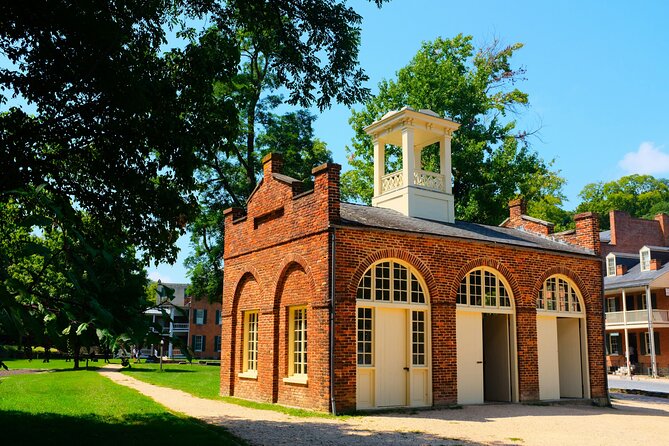
John Brown’s Fort is a modest brick building that once served as the fire engine house and became the final stronghold of John Brown’s abolitionist stand. Few places compress tension and meaning into something so small and tangible.
The audio here is valuable because it helps you connect the building’s size to the stakes of the raid. It’s not a grand palace; it’s a pressure cooker. Even if you know the story already, it’s the kind of stop that makes you pay attention to details you’d otherwise miss.
Lockwood House (Stop 7)
Lockwood House brings a different angle: it was used by Union officers and educators, and it’s tied to the leadership connected with Storer College. This stop helps you see that Harpers Ferry wasn’t only about conflict—it also became a place where education took hold after the war.
If you want a more complete picture of what reconstruction-era effort looked like on the ground, this is one of the places that supports that viewpoint.
St. Peter’s Roman Catholic Church (Stop 8)
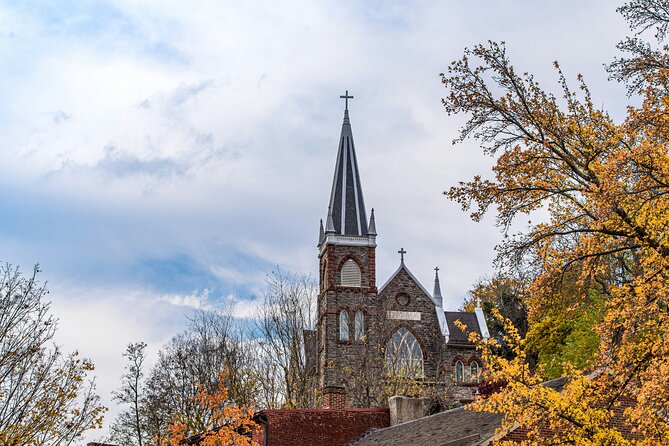
St. Peter’s Roman Catholic Church overlooks the town from a dramatic hillside perch. It connects to Irish immigrant families and a story of survival during the Civil War period.
This is a great “human resilience” stop, and it’s especially effective if you’re listening to the story while looking out over the same slopes and town geometry the building commands.
Storer College Campus (Stop 9)
Storer College was founded after the Civil War to educate formerly enslaved individuals, and it became a beacon of learning and leadership during Reconstruction. This campus stop ties the tour’s themes together: abolition didn’t end with one event; it continued through education and civil rights momentum.
It’s also a reminder that Harpers Ferry history is not just about one raid—it’s about the decades of change that followed.
River junction viewpoints: the land at the center of trade and strategy
The Point (Stop 10)
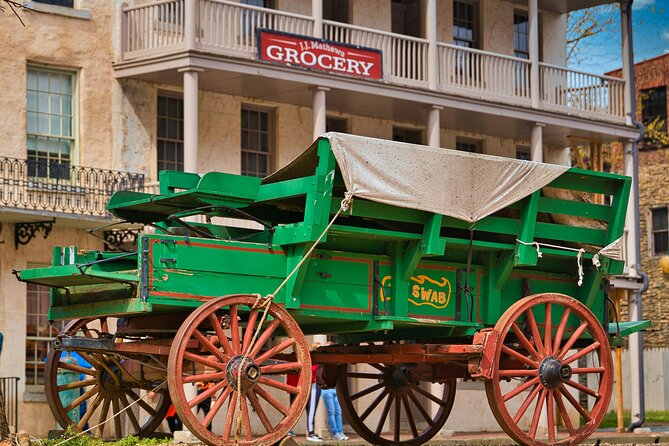
At The Point, you stand where the Potomac and Shenandoah Rivers meet—where geography, trade, and strategy converge. This is one of the tour’s best places to step back from buildings and focus on what the rivers made possible.
If you like understanding strategy through terrain, this is your payoff stop. The audio’s goal is to help you see why this junction mattered long before railroads and long after the last shot.
Virginius Island, West Virginia (Stop 11)
Virginius Island is now a peaceful woodland of ruins and trails. It used to be a bustling industrial village, and the remains reflect Harpers Ferry’s water-powered economy—rise, function, and eventual fade.
I like this stop because it shifts you away from the typical “war only” narrative. You’re reminded that towns run on work and power, not just conflict. The moss-covered remains make it easy to slow down and take your time reading the environment.
Lower Town gathering spots and the town loop you’ll finish back at
White Hall Tavern (Stop 12)
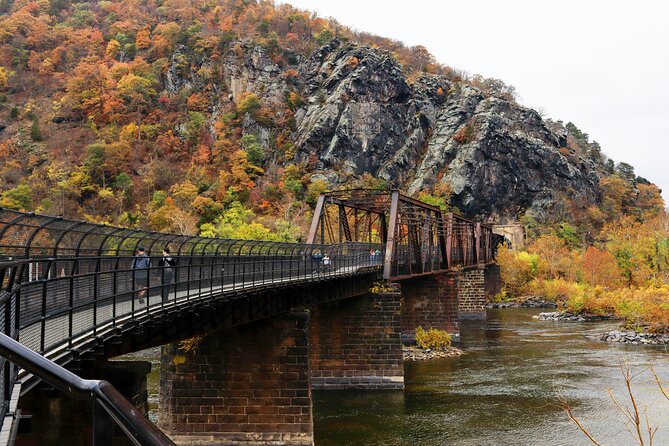
White Hall Tavern is a 19th-century gathering place where travelers, locals, and even Union soldiers came together. It’s the kind of stop that makes history feel less like a distant show and more like conversations that kept happening even during turbulent times.
Think of it as a social history pause in the middle of a story that could otherwise feel nonstop.
Murphy Farm (Stop 13)
Murphy Farm is a peaceful landscape with a turbulent past. It was once a battlefield, then later connected to powerful Civil Rights speeches. Today, it’s a reflection spot with panoramic views.
This is where the tour’s themes stretch across time. You go from Civil War conflict to civil rights-era struggle, which helps you connect the dots about what change can look like when it’s driven by people, not just dates.
Bolivar Heights (Stop 14)
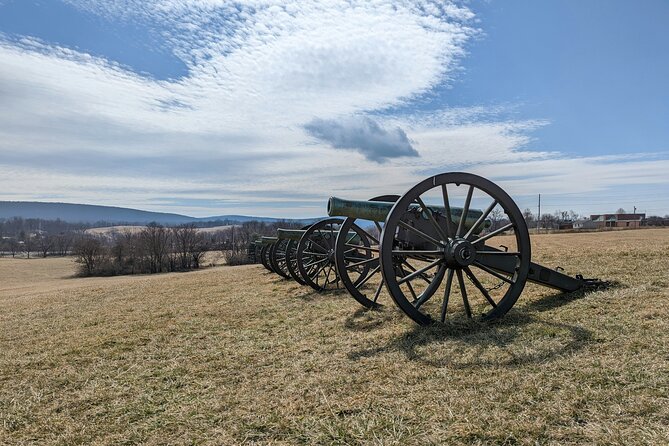
Bolivar Heights is one of the most fought-over ridges in Civil War history. The audio framing pushes past scenery and treats the overlook like a front-row seat to why Harpers Ferry was targeted.
If you want the “look at the terrain, then understand the battle logic” moment, this is it. And since it’s an uphill-feeling area, it may be the stop that tests your energy most—pace yourself.
Harpers Ferry Public Square (Stop 15)
The Public Square is the heart of town life and has seen markets, militias, protests, and parades. Even when you’re not inside museums, this kind of town center stop gives you a sense of how everyday life and political pressure coexist.
It’s also a great location to check your bearings before heading toward the station and the original ferry origins.
Lower Town Train Station (Stop 16)
The Lower Town Train Station appears again as a named stop, and that’s useful. By this point, you’ve seen enough of the landscape and institutions to appreciate the station as part of the town’s bigger identity: movement, access, and connection.
It’s also a natural place to slow down if you’ve built up fatigue. Since the tour ends back at the meeting point, you’ll be returning here at the finish.
The origins and the dramatic climb: where the ferry began and how the trail cuts up the cliff
Original Site, Shenandoah River Bridge (Stop 17)
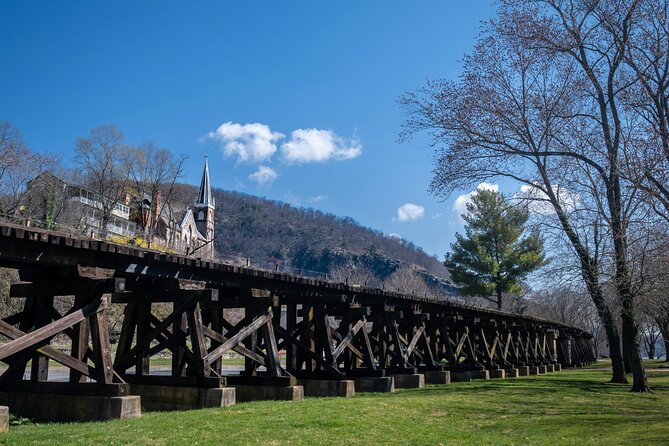
This is where it all began: Robert Harper’s 18th-century ferry launched a town that became a crossroads of commerce, conflict, and change. The audio at this stop helps you understand that Harpers Ferry’s origin isn’t just a name—it’s a crossing point.
From here, the tour feels more “rooted” because you’ve moved from big events back to the practical idea that people needed a way across the river.
Appalachian Trail Staircase (Stop 18)
The Appalachian Trail Staircase is carved into the cliffside and connects Lower Town to the Appalachian Trail. It’s dramatic, steep, and symbolic of the effort and perspective the trail demands.
This is the “pay attention to your body” part of the loop. If you’re not used to steep climbs, take it slow. If you’ve already spent the morning on hill sites, save energy for the staircase and enjoy shorter listening bursts.
Arsenal Square (Stop 19)
Arsenal Square once held a sprawling U.S. arsenal, including the explosive beginnings of John Brown’s raid. Today it can feel quiet, but the audio works to keep the weight in your mind as you stand in open space.
I like ending with a place that’s open and quiet because it closes the loop in a thoughtful way. You’ve seen buildings that held people and decisions; now you’re looking at the broader space where those events started.
Practical tips to make this tour feel easy (not exhausting)
- Download the audio before you go. With spotty service, you want playback ready, not buffering.
- Wear shoes that handle stairs and uneven ground. This is a walking tour, with climbs and an Appalachian Trail staircase.
- Use the map function if you lose your way, and expect a better experience if you start at the Lower Town Train Station and follow the story in order.
- If you like structure, let the location-based cues guide you. If you like flexibility, pause often and still keep moving stop-to-stop.
Should you book this Harpers Ferry Audio Tour?
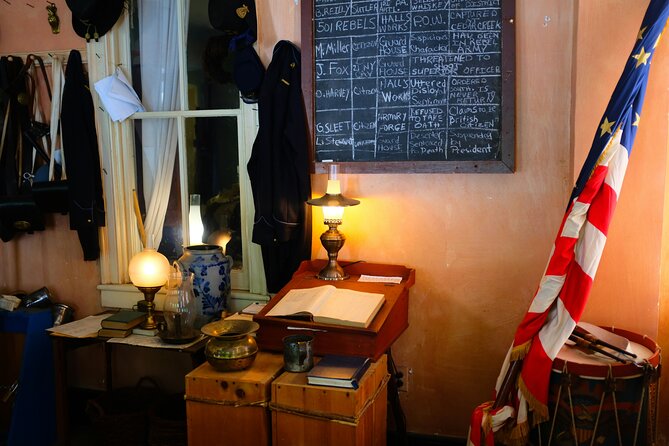
Book it if you want a self-paced, location-triggered way to see Harpers Ferry without buying a bundle of tickets. The $9.99 price makes sense when you treat it like guided attention: it helps you connect ruins, buildings, and overlooks into a single story you can follow at your own speed.
Skip it or adjust expectations if you dislike uphill walking. This tour includes cliffside and steep parts, and the walking distances can feel like a lot if you’re hoping for an easy town stroll. Also make sure you’re comfortable using a smartphone app for audio—because the tour depends on your device and pre-downloading for spotty cell service.
If you want a smart mix of Appalachian Trail landmarks, John Brown sites, and Civil War-to-Civil Rights connections, this is a strong way to spend a couple of hours in Harpers Ferry—one view, one stop, one story at a time.
FAQ
How much does the Harpers Ferry audio tour cost?
The tour costs $9.99 per person.
How long is the tour?
The tour lasts about 2 hours.
Where does the tour start and end?
It starts at the Lower Town Train Station at 182 Potomac St, Harpers Ferry, WV 25425, and it ends back at the meeting point.
Do I need to bring a smartphone?
Yes. The tour requires a smartphone (bring your own).
Can I download the tour ahead of time?
Yes. You should download before you go because cell service is spotty at best.
Is the tour in English?
Yes, it is offered in English.
Are there admission tickets at the stops?
The stops listed in the tour are shown as free admission.
Is this tour private for my group?
Yes. It’s described as a private tour/activity, so only your group participates.
What if I need to cancel?
Free cancellation is available. You can cancel up to 24 hours in advance for a full refund. Canceling less than 24 hours before the start time is not refunded.
Are young children free?
Yes. Children 10 and under are free.