Lisbon tastes better on foot and by ferry. This small-group route strings together Mouraria’s Moorish past, a bakery stop for pastel de nata, and a Tagus ferry ride to Cacilhas for a real waterfront lunch. You’ll get history you can feel under your feet, not just dates.
I especially like the built-in food flow: coffee and pastries at the start, then a Portuguese beer with major viewpoint time at Carmo Convent. I also like how the walk sets you up for the rest of your day, ending near Cais do Sodré so you can keep exploring right after lunch.
One caution: dietary needs can be tricky here. The tour is not suitable for celiacs, vegans, Kosher, or Halal, and gluten-free or vegetarian options are only available but not guaranteed at every stop.
In This Review
- Key highlights worth circling
- Starting in Martim Moniz, the multi-culture corner of town
- Mouraria’s Moorish Quarter and the fado story you’ll actually remember
- A bakery stop for pastel de nata and coffee, where you slow down
- Rossio Square and the neo-Manueline façade you pass without meaning to
- Carmo Convent viewpoint: beer, angles, and the Lisbon skyline puzzle
- Tagus River ferry to Cacilhas and the seafood rice lunch
- Price and value: what you’re really paying for in 4 hours
- Who this tour fits best (and who should think twice)
- What to do after the tour ends at Cais do Sodré
- Should you book this Lisbon Hidden Gems Walk?
- FAQ
- What is the duration of the Lisbon walk?
- Where does the tour start and where does it end?
- What’s included in the tour price?
- Are vegetarian or gluten-free meals available?
- Is the Santa Justa Lift included?
- Is this tour suitable for everyone physically?
Key highlights worth circling
- Mouraria’s Moorish Quarter on a car-free walk through narrow streets, churches, and traditional stores
- Fado deep context, including the UNESCO-listed art form and the story of Maria Severa
- Pastel de nata and hot coffee in a bakery tucked away from the main tourist streams
- Rossio Square cobblestones and architecture seen up close, including the neo-Manueline façade near Rossio station
- Carmo Convent viewpoint time with a Portuguese beer and wide angles over São Jorge Castle and the Santa Justa Lift
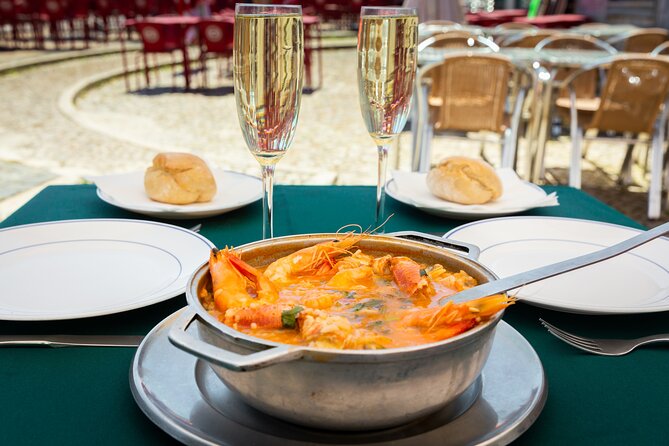
- Ferry to Cacilhas + riverside seafood rice lunch, with panoramic views as you eat
Starting in Martim Moniz, the multi-culture corner of town
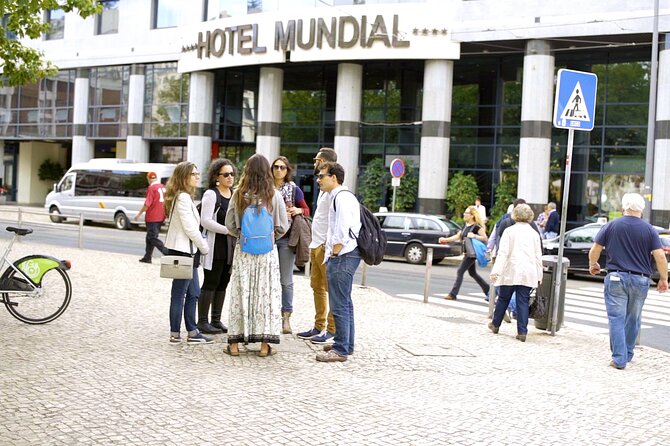
You meet at Praça Martim Moniz 2 in Lisbon’s Mouraria area, and that matters. This is a part of town where cultures have mixed for a long time, so the tour starts with a sense of everyday Lisbon, not a photo-only script.
Martim Moniz is one of those places you can smell before you see anything. It has a relaxed street energy, and on weekends there’s a market vibe with biological products, plus shops, music, and shows. That sets the tone for what comes next: your guide talks neighborhood history while you walk, so you’re not just learning words. You’re walking through them.
A good sign here is the pace. The walk is planned around stops that let you reset, not just shuffle forward. The tour is also capped at 14 travelers, so you’re less likely to get lost in a crowd when you ask a question.
Mouraria’s Moorish Quarter and the fado story you’ll actually remember
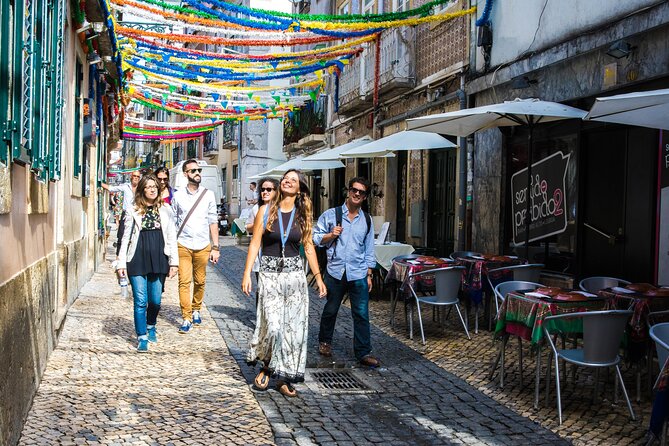
From Martim Moniz you move into the Moorish Quarter, a part of Lisbon you won’t fully get from most mainstream routes. This area was traditionally a residential district of the Moors, and your guide frames that in a practical way: narrow streets, small churches, and traditional storefronts are not random. They’re part of how the neighborhood grew and survived.
One of the most memorable parts is how the guide introduces fado. It’s not treated like background music. You learn what fado is, why it’s significant enough to be inscribed as UNESCO intangible cultural heritage, and then you connect it to a key figure: Maria Severa. That story adds a human thread, so later, if you catch fado in a tavern, you’ll understand what you’re hearing.
You’ll also hear lots of local details that change how you see the streets. Instead of thinking, This looks old, you start thinking, This layout explains how people lived here. And that’s what makes the walk feel like learning Lisbon, not just seeing it.
A bakery stop for pastel de nata and coffee, where you slow down

A walking tour can rush you. This one uses food stops to slow you down at the right moments. You’ll reach a bakery hidden away from the busiest tourist patterns, where you can enjoy a pastel de nata with a hot coffee.
What I like about this kind of stop is that it’s not just a snack break. It’s timed so the conversation has a comfortable rhythm. You’re listening to Lisbon’s stories while you’re eating something that still feels like daily life.
If you have sweet-tooth standards, keep them. Pastel de nata is simple, but quality varies. The goal here is to taste the classic in a place that feels lived-in, not packaged for crowds.
Rossio Square and the neo-Manueline façade you pass without meaning to

After Mouraria, the route shifts toward the downtown core. You pass the Rossio train station area and catch a neo-Manueline façade along the way. Even if you’re not a style nerd, it’s the kind of architectural detail that’s easy to miss when you’re walking without context.
Then you head toward Rossio Square (Praça de D. Pedro IV), a major 19th-century civic space that’s been a stage for all sorts of dramatic moments over time. Your guide helps you read what you’re seeing now, including the classic Portuguese cobblestones and where their story comes from. It’s one of those small lessons that makes the square feel more real, because you understand the material choices and what they mean.
This is also a good time to regroup. The walk takes you from tight neighborhood streets into a bigger public square environment, and you can feel the change in tempo.
Carmo Convent viewpoint: beer, angles, and the Lisbon skyline puzzle
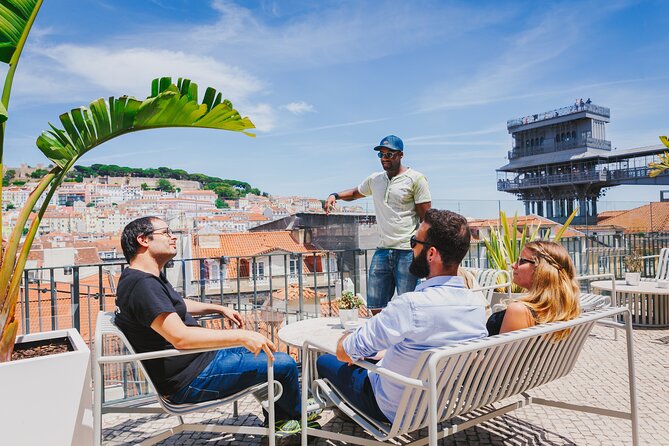
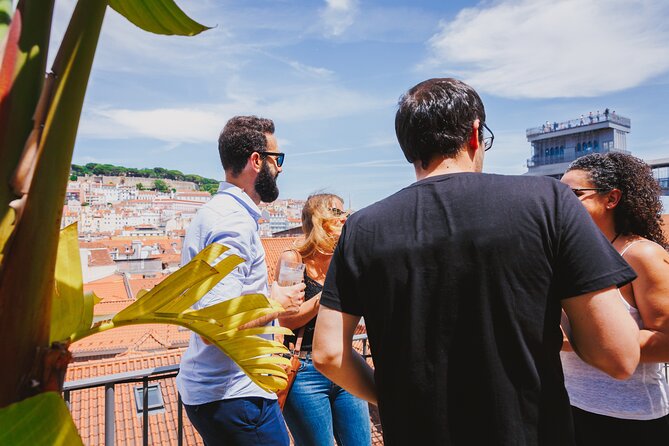
Next comes one of the best parts of the tour: Carmo Convent. Your guide brings you here for stunning views across Lisbon, including São Jorge Castle and the Santa Justa Lift in the same panorama.
You’ll also get a refreshing Portuguese beer while you’re up there. That’s not just a nice perk. It’s strategically placed for the moment you’re most likely to want to stop moving: when your eyes need time to absorb the skyline. This is where photos become easier because you’re seeing Lisbon from above, in a way that straight streets and viewpoints usually fail to deliver.
Two practical notes for this stop:
- Wear shoes with real grip. Lisbon slopes and stone can be unforgiving.
- You’re getting the Santa Justa Lift as a view, not a ride. The tour does not include an actual trip on the lift.
Tagus River ferry to Cacilhas and the seafood rice lunch

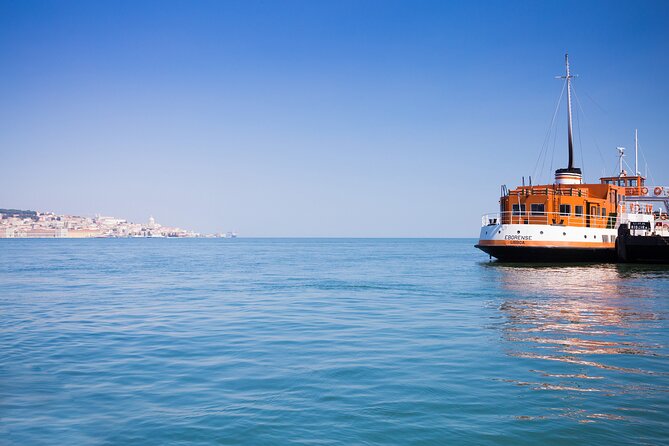
Then the tour turns scenic and very Lisbon: you take a ferry ride on the Tagus River and head toward Cacilhas. The river is a constant theme in Portuguese songs and poems, and being out on the water helps you understand why it’s such a cultural anchor. The view shifts quickly, and you get angles back toward Lisbon that you can’t recreate from shore.
Once you reach the other side, you go to a riverside restaurant where lunch is included: seafood rice, plus green wine and bread. The setting is part of the meal. You’re eating with a panoramic view, so it doesn’t feel like a rushed “tour lunch” served at a random back room.
Cacilhas itself is described as a small village filled with restaurants, especially seafood. Even if you don’t do much extra wandering there, the ferry-to-lunch sequence gives you a new sense of Lisbon’s geography. It’s a reminder that the city isn’t just hills and viewpoints. It’s also a working river.
Price and value: what you’re really paying for in 4 hours
The tour costs $48.39 per person for about 4 hours, and it includes more than just a guide. You get coffee and pastries, a full lunch with seafood rice and green wine, a beer at the viewpoint, and a ferry-boat ride.
That combination is why it tends to feel like good value. If you tried to rebuild this experience on your own, you’d still be paying for transport across the river, plus a guided narrative that helps you understand what you’re seeing. This format also saves time. You don’t have to plan how to connect Mouraria to Rossio, views at Carmo, and then the river trip.
Group size helps too. With a maximum of 14 travelers, it’s easier to move, ask questions, and actually hear the guide rather than playing a game of shoulder-to-shoulder audio roulette.
Who this tour fits best (and who should think twice)
This is a great option if you want a first-day orientation in Lisbon: you’ll get neighborhoods, key landmarks, and a memorable cultural thread through fado, all in one timed outing. It’s also a solid choice if you like food-and-walk travel, because the itinerary is built around pauses for coffee, beer, and lunch.
You should think twice if food rules are strict. Even though vegetarian and gluten-free options are available, they’re not guaranteed on all stops, and the tour explicitly says it’s not suitable for celiacs, vegans, Kosher, and Halal. If you fall into one of those groups, you’ll want a different plan.
Physical effort is moderate, but there is walking and likely some uneven ground. If stairs are hard for you, ask before booking since viewpoint areas in central Lisbon often require climbing or navigating stone steps.
Finally, language is English, and the meeting point is near public transportation, so you won’t need a car to make it work.
What to do after the tour ends at Cais do Sodré
The tour finishes at Cais do Sodré, which is handy. This area is one of Lisbon’s busiest junction points, with ferry boat connections and nearby train and metro options.
It also places you close to nightlife, including Pink Street nearby. If you want to keep the vibe going, you’ll be in the right zone without having to crisscross the city again.
If you prefer calmer plans, use what you learned on the walk. You’ll know how Mouraria connects to the downtown core and why the river mattered historically and culturally. That makes whatever you choose next feel easier and more informed.
Should you book this Lisbon Hidden Gems Walk?
If you want a 4-hour sampler that mixes local neighborhoods, a proper cultural story (fado and Maria Severa), and a real meal with ferry views, this is a smart booking. The small group size and multiple food stops make it feel like a guided day out, not a rushed checklist.
I’d only skip or rethink it if your diet is very restricted. The tour is clear that certain needs can’t be accommodated, and alternatives aren’t guaranteed everywhere. If you’re in a flexible-to-moderate dietary category, you’ll likely find something you can eat and still enjoy the experience.
If your goal is to get your bearings fast while also eating well, this one earns its reputation for value and pace. And if you’re lucky and your guide is the kind who can make Lisbon’s history sound like street conversation, you’ll leave with stories you’ll still be repeating at dinner.
FAQ
What is the duration of the Lisbon walk?
It runs for approximately 4 hours.
Where does the tour start and where does it end?
It starts at Praça Martim Moniz 2 in Lisbon and ends at Cais do Sodré, Lisbon.
What’s included in the tour price?
The tour includes coffee and pastries, lunch (seafood rice with green wine and bread), a ferry-boat ride, beer, and a local guide.
Are vegetarian or gluten-free meals available?
Vegetarian and gluten-free options are available, but they are not guaranteed on all stops. It is not suitable for celiacs, vegans, Kosher, or Halal.
Is the Santa Justa Lift included?
No. The tour does not include a trip on the Santa Justa Lift (you may see it from viewpoints).
Is this tour suitable for everyone physically?
It’s listed as requiring moderate physical fitness level, so it involves walking and some terrain that may be challenging for people who struggle with uneven ground and stairs.