REVIEW · MUMBAI
Mumbai City Tour with Ferry Ride and Dharavi Slum
Book on Viator →Operated by India Magic Tours · Bookable on Viator
Eight hours, and you see two Mumbais fast.
This private day tour blends big-name sights like Gateway of India with a guided walk through Dharavi, then breaks up the day with a ferry off the coast. You get hotel pickup and drop-off, a local guide to answer your questions, plus a smooth private air-conditioned vehicle that helps when Mumbai traffic tries to eat your day.
My favorite part is the mix: landmarks for orientation, and Dharavi for real context. Another plus is the pacing—short stops where you can step out, look, and get back in the car without feeling stuck in one place too long. One thing to consider: the day can flex based on timing and conditions, especially the ferry (which may pause in monsoon season) and the fact that Mani Bhavan is skipped on slots after 4 PM.
In This Review
- Key things that make this tour worth your time
- Why this Mumbai classics + Dharavi day makes sense
- Price and what $96 really buys you
- Getting around: pickup, traffic, and how the schedule holds up
- Dharavi walking tour: how to make it respectful and genuinely useful
- Dhobi Ghat, Hanging Gardens, and Mani Bhavan: the human side of Mumbai
- Dhobi Ghat: the laundry economy in motion
- Hanging Gardens: a quick breather with sunset potential
- Mani Bhavan Gandhi Museum: when your timing allows it
- Marine Drive and Oval Maidan: classic views you can appreciate fast
- Marine Drive: a coastline road with a skyline rhythm
- Oval Maidan: heritage buildings and the big-city frame
- Gateway of India to Colaba: the ferry ride that changes the day
- Gateway of India: the starting point feeling
- Colaba + ferry cruise from Apollo Bunder
- Chhatrapati Shivaji Terminus and Town Hall: Victorian Bombay in motion
- Chhatrapati Shivaji Terminus: the Raj-era rail masterpiece
- Town Hall: another heritage anchor
- How to get the most out of your guide (without overthinking it)
- Who this tour is best for (and who should think twice)
- Should you book this Mumbai City Tour with Dharavi and the ferry?
- FAQ
- FAQ
- How long is the Mumbai City Tour with ferry ride and Dharavi slum?
- Is hotel pickup and drop-off included?
- What’s included in the price?
- Is food included?
- Is the ferry ride always included?
- Can I take photos in Dharavi?
- What about Mani Bhavan Gandhi Museum timing?
- What should I wear for the tour?
- Does the tour run in all weather?
- Is this a private tour?
Key things that make this tour worth your time
- Dharavi with a guided walk through both residential and commercial areas, about 1 to 1.5 hours
- A real South Mumbai route that hits classic sights from Marine Drive to the Gateway of India
- Coastal ferry time from Apollo Bunder (Colaba), included when it’s operating
- Mani Bhavan Gandhi Museum when your time slot allows it
- Multiple heritage stops like Oval Maidan and Chhatrapati Shivaji Terminus
- Private setup with hotel pickup/drop-off and bottled water
Why this Mumbai classics + Dharavi day makes sense
Mumbai is a city of contrast, and this route does a good job of showing that in one day. You start with orientation in South Mumbai—then you shift to a place that most first-time visitors only hear about, not understand. The big win here is that you’re not bouncing around alone. With a guide, you get answers on what you’re seeing and why it matters, even when the scenes are intense.
This is also a practical choice if your time is short. The route is built around “high signal” stops: places you’ll recognize from photos and maps, plus a Dharavi walk that gives you an on-the-ground sense of how a community functions. If you want a quick overview without sacrificing depth, this style of tour fits.
Finally, it’s private. That matters in a city where group logistics can turn a sightseeing day into a waiting game. Here, you can ask questions and move at a pace that actually works for you.
Price and what $96 really buys you
At $96 per person for roughly 8 hours, you’re paying for more than “entry tickets.” What’s included is the core value:
- Hotel pickup and drop-off
- Private air-conditioned vehicle
- Local guide
- Bottled water
- Entrance fees for several stops (some are free, others are included)
Food and drinks are not included, and souvenir photos cost extra. But the biggest reason this price can feel reasonable is that you avoid the hassle of arranging transport for a full circuit across Mumbai, especially with ferry time and multiple heritage sites. In places like this, transport + guide time often becomes the real cost.
Is it perfect value for everyone? Not always. If you’re the type who mainly wants museums and quiet viewpoints, the Dharavi component may be emotionally heavy. And if you’re hoping for a slow, leisurely day with long breaks, this schedule is more of an efficient, see-a-lot format.
Getting around: pickup, traffic, and how the schedule holds up
This is built as a private car tour with hotel/port/airport pickup and drop-off. That’s the right approach in Mumbai. Traffic can be rough, and your day will feel more manageable when you’re not constantly recalculating travel times.
A few timing notes you should keep in mind:
- The total duration is listed at about 8 hours, but the order of stops and real-world timing can vary.
- If your slot is after 4 PM, Mani Bhavan won’t be shown.
- The ferry ride is included, but it may not run in monsoon season (July 1 to September 15). If that happens, the plan shifts to Taj Mahal Palace Hotel inside or snacks instead.
Weather is another factor. The tour operates in all weather conditions, but you still need to dress for it. Heat shows up fast in open-air parts of the route (like Marine Drive and the gardens), and Dharavi is a walking segment. You should have a moderate fitness level for the day.
If you’re someone who gets grumpy when you’re too hot or too rushed, plan to bring patience. That’s not a knock on the tour—it’s just Mumbai.
Dharavi walking tour: how to make it respectful and genuinely useful
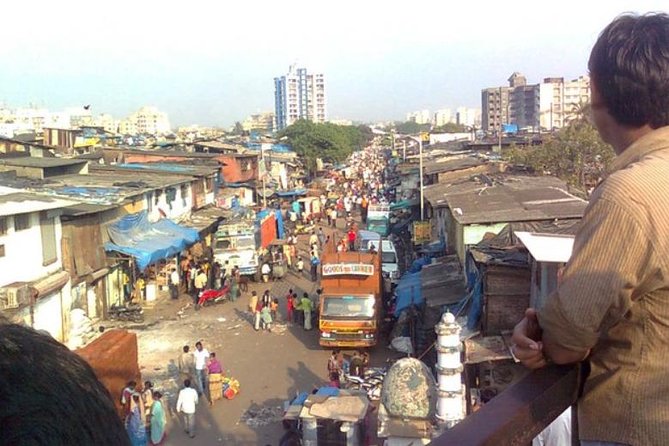
The Dharavi stop is about 1 to 1.5 hours on foot. You’ll move through parts of the community that include both residential and commercial areas, which is key. It’s not just a “look and leave” experience.
The rules matter here. Photography is strictly not allowed at slums, so don’t plan on taking casual pictures. Instead, rely on what you’re learning through conversation and careful observation. If you want the experience to feel meaningful, ask your guide questions like:
- What does everyday work look like here?
- How do community spaces function?
- What should you know about daily life before you judge what you see?
Guides can make a huge difference in how this stop lands. I’ve heard firsthand from people who went out with guides like Divya and Rahul, and the consistent theme is that they bring context and a respectful tone. You’re not just passing through streets—you’re walking with someone who knows the area and can point out what’s going on without sensationalizing it.
What to consider: this is a real-life environment, and it can hit your senses. You might come away more reflective than entertained. If you want only “pretty tourist photos,” Dharavi may not be your style of stop.
Dhobi Ghat, Hanging Gardens, and Mani Bhavan: the human side of Mumbai
This tour threads together everyday life, city scenery, and Gandhi’s legacy.
Dhobi Ghat: the laundry economy in motion
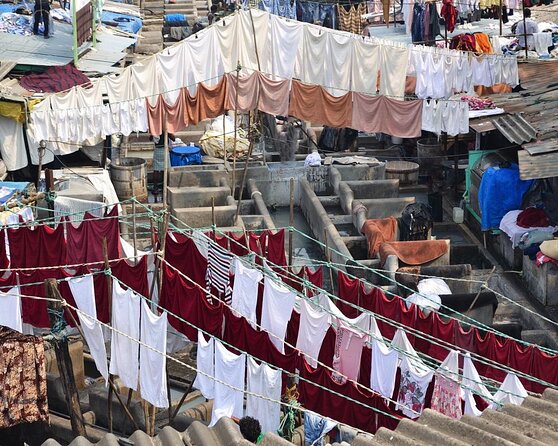
You’ll stop at Dhobi Ghat, where traditional laundrymen—often described as “dhobi” or working from the ghats—collect dirty linen, wash it, and return it neatly pressed. It’s short (about 15 minutes) and the admission isn’t included.
Even with a quick stop, it’s a good reminder that Mumbai’s systems often run on local skill and routine, not just big institutions. If you’re sensitive about privacy, keep your distance and let the working process be the focus.
Hanging Gardens: a quick breather with sunset potential
Next is Hanging Gardens on Malabar Hill. It’s around 20 minutes and free to enter. The location is built for views, including looks across toward the Arabian Sea side.
Don’t expect a long linger session here. This is a “step out, look, cool off if you can, then go” stop.
Mani Bhavan Gandhi Museum: when your timing allows it
Mani Bhavan is the old Mumbai residence of Mahatma Gandhi. It’s a two-story building that holds a reference library and photo exhibitions connected to his life. Admission is included and the stop is about 20 minutes.
Here’s the timing catch: if you book a slot after 4 PM, Mani Bhavan won’t be shown. If this museum is a must for your trip, choose your start time carefully.
Marine Drive and Oval Maidan: classic views you can appreciate fast
After the more intense stops, this part of the day gives you space to reset.
Marine Drive: a coastline road with a skyline rhythm
Marine Drive is a laid-out boulevard along South Mumbai’s coastline, shaped like an upturned C, and it runs about 3 km. You’ll have around 25 minutes, and there’s no admission fee.
It’s a great stop for orientation because you can see how South Mumbai is planned and how the city faces the bay. If you like city photography, just remember you may be in a crowded public area—stay aware of your belongings and keep your pace simple.
Oval Maidan: heritage buildings and the big-city frame
Then comes Oval Maidan, with Victorian neo-gothic buildings and nearby heritage structures like Bombay High Court and Mumbai University. Admission is listed as included for this stop and it’s around 20 minutes.
This is a good “mental reset” point. You’re not just looking at one monument—you’re seeing the city’s institutional backbone.
Gateway of India to Colaba: the ferry ride that changes the day
The tour hits the Gateway of India next, then shifts to Colaba for the water part.
Gateway of India: the starting point feeling
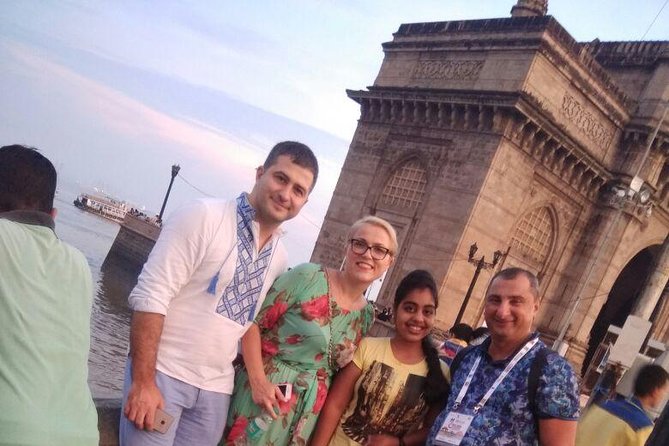
Gateway of India is Mumbai’s famous monument and often a starting point for exploration. You’ll spend about 30 minutes, and admission is free.
Even if you’ve already seen it in photos, seeing it in person helps you understand the geography of Mumbai’s tourist core. It also sets you up for the next stop, where you’ll literally move away from the shore and see the coastline from the water.
Colaba + ferry cruise from Apollo Bunder
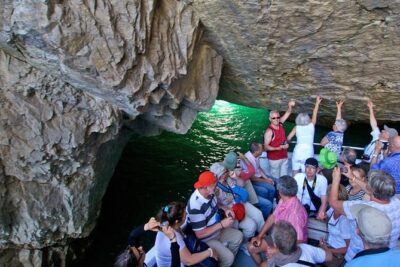
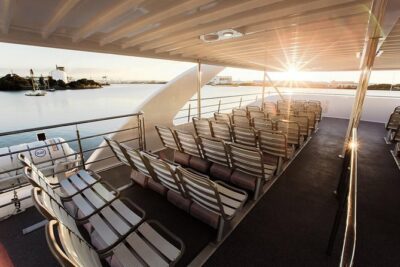
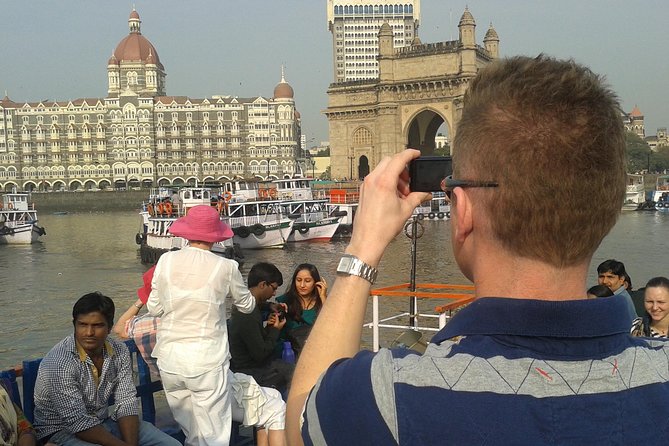
For the coast view, you go from the ferry point at Apollo Bunder in Colaba on a ferry cruise along the city coastline. The stop time is about 30 minutes, and it’s included.
This ferry element is one of the best parts of the schedule because it breaks up the day in a way cars and sidewalks can’t. You get a different perspective on South Mumbai’s edge.
Important note: the ferry ride might not be operational from July 1 to September 15 due to monsoon season. When that happens, the tour shifts to Taj Mahal Palace Hotel from inside or provides snacks. If your travel dates fall in that window, ask ahead what the backup plan will be so there are no surprises.
Chhatrapati Shivaji Terminus and Town Hall: Victorian Bombay in motion
Two final heritage stops round out the route with architecture that feels like a time capsule.
Chhatrapati Shivaji Terminus: the Raj-era rail masterpiece
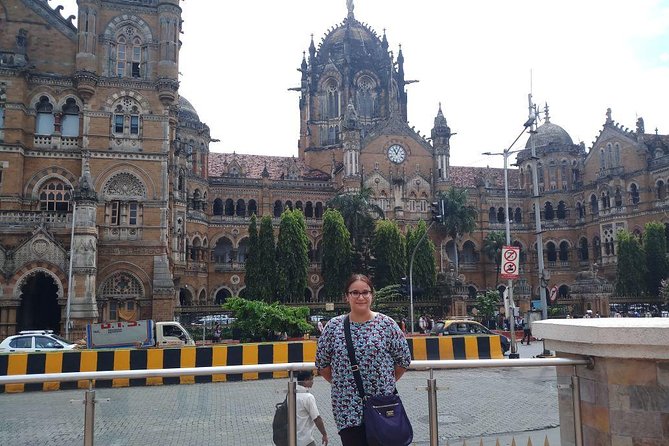
You’ll visit Chhatrapati Shivaji Terminus for about 15 minutes. It’s modeled on St Pancras in London, with carved stone friezes, stained glass windows, and flying buttresses. Admission is included.
This stop works well even if you’re not a rail fanatic. It’s one of those buildings that makes you look up, even while you’re thinking about the next part of the day.
Town Hall: another heritage anchor
The schedule also includes Town Hall, described as one of the most majestic heritage structures among Victorian Bombay buildings. You’ll have a brief stop here as part of the overall route.
If you’re a fan of architecture and you want your day to include more than sightseeing snapshots, this ending gives you a sense of how much Mumbai was shaped by different waves of influence.
How to get the most out of your guide (without overthinking it)
Your guide is the main ingredient in this kind of day. The route is set, but the quality of your experience comes from how your guide frames what you see—especially at Dharavi.
From what I’ve heard from people who went on this tour with guides such as Vishal and Rahul, plus great drivers like Vikrant and Pradeep, the best days tend to share a few traits:
- The guide explains what you’re looking at in plain language
- You feel safe and comfortable in traffic
- The guide adjusts when needed so you still get key stops and meaningful context
A practical tip: before you start walking in Dharavi, remind yourself that you’re there to learn, not to judge or to grab photos. Then, use your questions to guide where you focus. Your guide can steer you toward the residential and commercial areas you’ll get the most from.
Also, bring a small amount of cash for minor costs you might run into, since food is not included and not every stop’s needs are spelled out beyond what’s listed.
Who this tour is best for (and who should think twice)
This is a strong match if you:
- Have limited time and want a structured route across South Mumbai
- Want a local guide rather than doing this alone
- Are curious about Mumbai beyond monuments
- Can handle a walking segment in real city conditions
It’s less ideal if you:
- Want a mostly relaxing day with minimal walking
- Strongly dislike tours that include poverty and real working neighborhoods
- Are looking for lots of museum time (many stops are short)
You also need to follow the modest dress guidance. It’s not only respectful—it helps you move through different cultural spaces without friction.
Should you book this Mumbai City Tour with Dharavi and the ferry?
I’d book it if you want a one-day overview that includes both the famous and the real. The value is strongest when you use the guide well—ask questions at Dharavi, pay attention to the way your route shifts from coastline scenery to Gandhi’s legacy and Victorian-era architecture.
That said, I’d choose your expectations carefully:
- The day can run shorter than the idealized time, depending on traffic and conditions.
- Ferry operations can change in monsoon season, with a substitution plan instead.
- Mani Bhavan depends on your start time, so don’t assume it’s guaranteed.
If you can handle heat, crowds, and a sensitive learning environment at Dharavi, this tour can feel like an efficient way to get your bearings fast. If you’d rather keep things light and purely scenic, you may find the Dharavi portion more intense than you want.
FAQ
FAQ
How long is the Mumbai City Tour with ferry ride and Dharavi slum?
It runs about 8 hours (approx.).
Is hotel pickup and drop-off included?
Yes. Pickup and drop-off are included from your accommodation, hotels, or the port/airport.
What’s included in the price?
You get transport by private air-conditioned vehicle, a local guide, bottled water, and entrance fees for some stops. You also get a mobile ticket and a group discount option.
Is food included?
No. Food and drinks are not included.
Is the ferry ride always included?
The ferry ride is included when operational. It may not run during monsoon season from July 1 to September 15, and the tour may substitute Taj Mahal Palace Hotel inside or snacks.
Can I take photos in Dharavi?
No. Photography is strictly not allowed at slums.
What about Mani Bhavan Gandhi Museum timing?
Mani Bhavan is not shown if you select a tour slot after 4 PM (16:00 HRS).
What should I wear for the tour?
Dress modestly.
Does the tour run in all weather?
Yes, it operates in all weather conditions, so you should dress appropriately.
Is this a private tour?
Yes. It’s private, and only your group participates.