REVIEW · SEATTLE
Seattle, WA to Victoria, BC High-Speed Passenger Ferry: ONE-WAY
Book on Viator →Operated by FRS Clipper · Bookable on Viator
Fast ferries change your day.
This one-way Seattle to Victoria run on the high-speed FRS Clipper is a simple way to get from one city to the other without dealing with a border drive. You’ll trade traffic and parking for a smooth catamaran ride, then step off right at Victoria’s Inner Harbour at the Belleville Terminal.
I particularly like two things: first, the cruise is packed with real scenery as you cut through Puget Sound and the Strait of Juan de Fuca. Second, the on-board setup is built for passengers, with duty-free shopping for the US-to-Canada crossing and staff who keep things moving.
One thing to plan around is that your ticket does not include food and drinks, and there are extra costs if you need checked luggage or an upgraded seat. Also, the service depends on good weather, so build a little wiggle room in your Victoria schedule.
In This Review
- Quick hits before you buy
- FRS Clipper Seattle–Victoria: 3 hours of speed and water views
- Seattle check-in at 2701 Alaskan Way: get situated fast
- Boarding the catamaran: seating classes and what you should choose
- Duty-free shopping onboard: nice to have, not a gimmick
- The scenery window: Puget Sound to the Strait of Juan de Fuca
- Victoria landing at Belleville Terminal: downtown right away
- Price and value: what $136.50 includes, and what costs extra
- Seat upgrades: when Comfort or Vista is worth your money
- Border and travel rules you should not ignore
- Small print: carry-on limits, bikes, dogs, and a passenger-only ferry
- Should you book this Seattle to Victoria one-way ferry?
- FAQ
- How long is the Seattle to Victoria one-way ferry?
- Where do I board and where does the ferry arrive?
- Is this a passenger-only ferry or can I bring my car?
- Do I need a passport to cross into Canada by ferry?
- What baggage can I bring?
- Is food and drink included in the ticket?
- Is duty-free shopping available onboard?
- Are there seat upgrades?
Quick hits before you buy
- Downtown drop-off in Victoria at the Belleville Terminal in the Inner Harbour
- Duty-free shopping onboard because you’re crossing from the US into Canada
- Puget Sound and Strait views with frequent photo opportunities through large windows
- Comfort-forward onboard touches, including nausea assistance noted by riders
- Upgrades exist (Vista and Comfort classes), with Comfort linked to a better view
- Passenger-only ferry: no autos, and bikes/dogs have restrictions that must be declared
FRS Clipper Seattle–Victoria: 3 hours of speed and water views
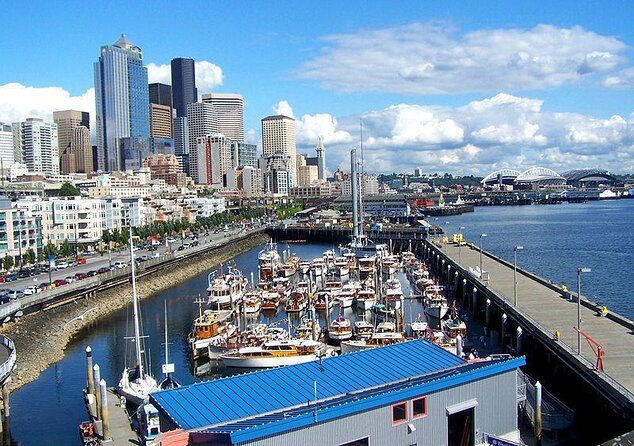
If you like the idea of reaching Victoria while your morning still feels like a morning, this route fits. The crossing takes about 3 hours and is designed as a high-speed passenger ferry, not a slow sightseeing boat.
You’re sitting where the action is: big windows and clear sightlines for the entire ride. Even in less-than-perfect conditions, the overall feel tends to be calm and controlled, not chaotic, which matters when you’re trying to enjoy the views instead of white-knuckling for your camera.
The best part is that the trip itself is the attraction. You’re moving through the coastal scenery between Seattle and Vancouver Island, and the on-board narration/spotting help makes it easier to notice what’s happening outside.
Seattle check-in at 2701 Alaskan Way: get situated fast
Your departure point is at 2701 Alaskan Wy, Seattle, WA 98121. This is one of those routes where getting to the terminal a bit early helps—boarding is straightforward, but you don’t want to arrive at the last second and start your crossing stressed.
You’re also traveling as a passenger, not a vehicle. Since autos aren’t allowed, you’ll only be managing your bags and your seat, which keeps the whole process simpler than most “drive-on” ferry experiences.
Keep your carry-on rules in mind: you’re allowed 1 small carry on. If you’re tempted to bring a lot “just in case,” you’ll likely feel that squeeze during boarding, so pack like you’re flying—because in practice, that’s the vibe.
And yes, you can bring a service animal. If you have a pet or a bike, you must flag it ahead of time because there are restrictions and you’ll need to advise at booking.
Boarding the catamaran: seating classes and what you should choose
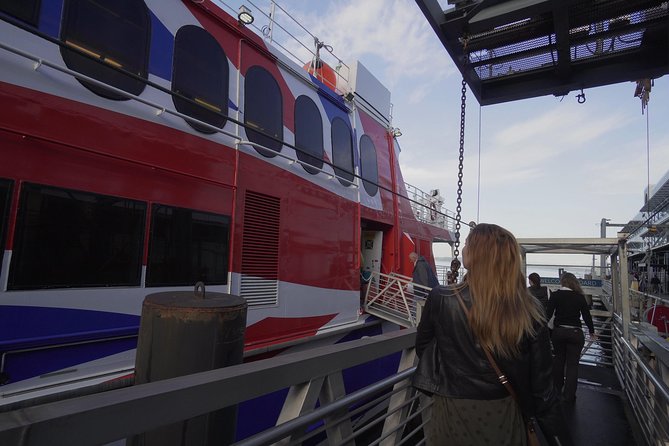
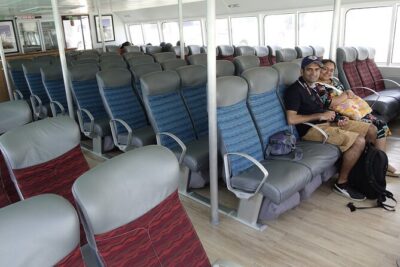
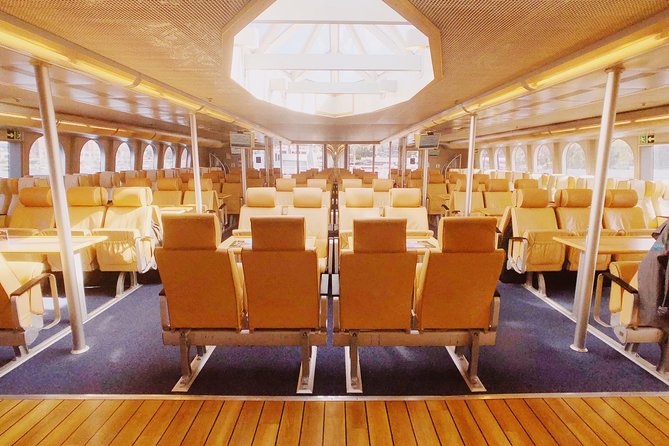
This ferry includes economy class seating, and there are upgrades available: Vista and Comfort classes. If you’re the type who wants the best view and a more relaxed experience, Comfort is the one many people lean toward.
From rider feedback, the biggest “upgrade payoff” is the comfort of being in the better viewing position and having extras included in the higher class experience. One review specifically called out free snacks and a better view in Comfort Class.
If you’re budget-conscious, economy can still work well. You’ll still get the scenery through the windows and the core ferry experience is the same—fast crossing, service onboard, and arrival right in town.
The one practical idea: decide based on what you care about most. If the trip is mostly transportation, economy saves money. If you want the crossing to feel like part of your vacation, the upgrade is often worth considering.
Duty-free shopping onboard: nice to have, not a gimmick
Because you’re crossing from the US to Canada, duty-free shopping is available onboard. That’s a real perk on a one-way trip—you’re not just commuting, you have something to browse while you’re waiting for Victoria to come into view.
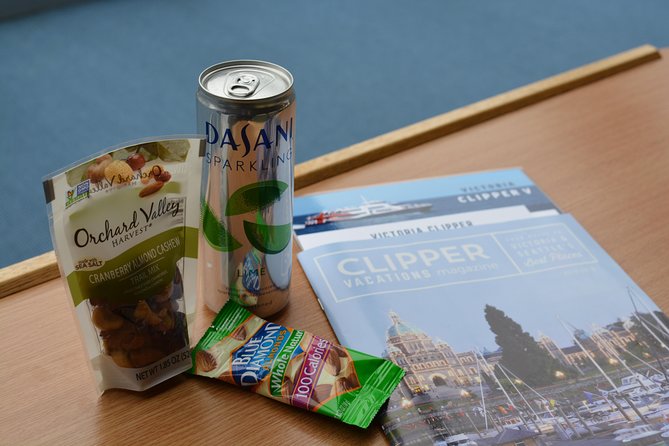
You’ll also find food and beverages available for purchase. The key word here is purchase. Your ticket covers the ride, fuel surcharge, taxes (GST), and economy seating, but it does not cover meals.
A couple of reviews mention breakfast being good but expensive, and another notes that food is pre-packaged and edible rather than memorable. Translation: come prepared to spend a bit if you want to eat onboard, but don’t expect a full restaurant meal experience.
Alcohol is available to purchase too. If you’re prone to motion or you’re sensitive to how you feel on boats, keep it light—you can still enjoy the cruise without turning it into an onboard “all day” party.
The scenery window: Puget Sound to the Strait of Juan de Fuca
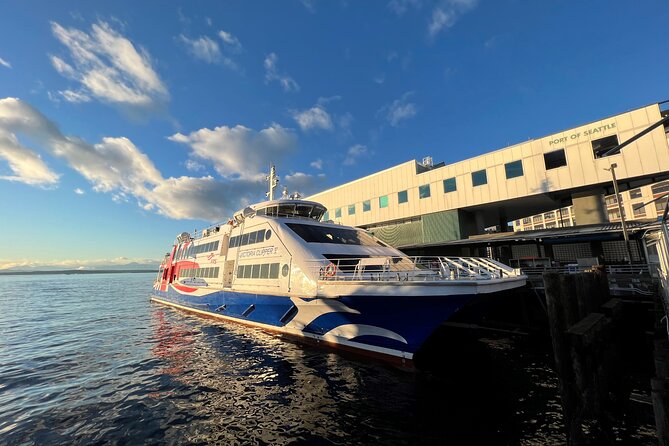
This is where the ride justifies itself. You get views of Puget Sound and the Strait of Juan de Fuca, and the ferry moves fast enough that you’re not stuck staring at the same stretch of water for long.
One of the standout moments is wildlife spotting. Several riders talk about seeing whales, and more than one mentions the crew slowing down so passengers could take photos. If you’re a camera person, that’s the kind of detail that turns a routine crossing into something you’ll remember.
There’s also narration on board—some form of captioning or on-screen explanation that points out sights along the way. One review mentions it even helped spot a pod of whales.
And if you’re worried about seasickness, this route won’t feel like a rough cruise for everyone. At least some riders reported smooth sailing and said they didn’t get sick. The ferry also provides nausea assistance, which is reassuring if you’re even mildly motion-sensitive.
Victoria landing at Belleville Terminal: downtown right away
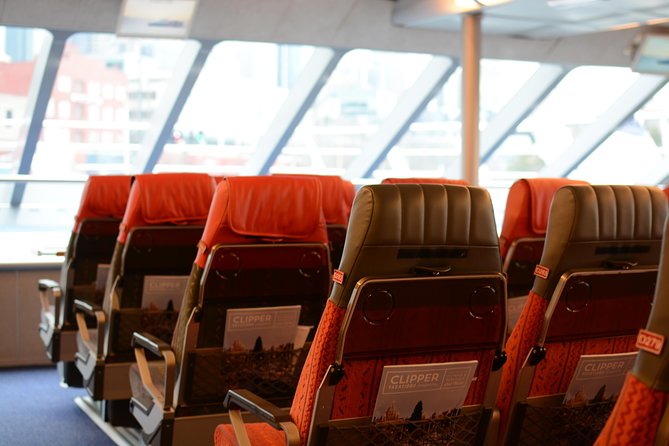
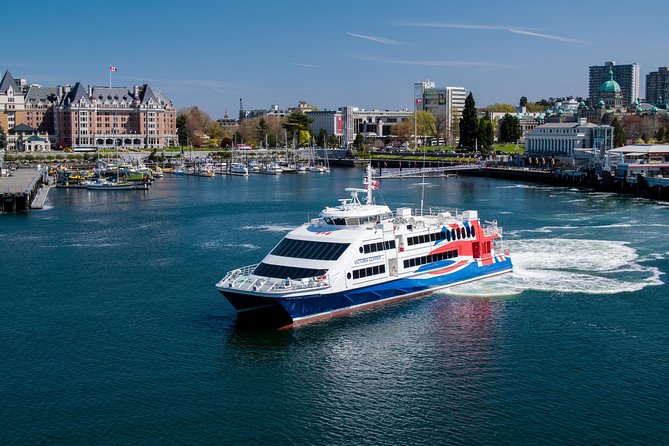
You finish at Belleville Terminal, 254 Belleville St., Victoria, BC V8V 1X2, located in Victoria’s Inner Harbour. This matters a lot. You’re not landing at some distant dock that forces you into a long transfer—you’re dropped where dining, shopping, and sightseeing start fast.
From there, it’s easy to shift into “city mode.” Victoria’s downtown is exactly what most people hope for when they book this ferry: walkable options, restaurants, and landmarks you can reach without a complicated plan.
If you like a simple day structure, this one is your friend. You arrive, you start exploring, and you don’t spend your first hour in Victoria figuring out where to go next.
Price and value: what $136.50 includes, and what costs extra
At $136.50 per person one-way, it’s not the cheapest way to travel between Seattle and Victoria. But it’s often good value for what you’re buying: time, simplicity, and a direct downtown-to-downtown experience.
Here’s what you do get in that price:
- Economy class seating
- GST and fuel surcharge
- The core ferry transport with onboard services (shopping and purchases available)
What costs extra:
- Food and drinks (including alcohol)
- Checked luggage: $20.00 per piece
- Seat upgrades (Vista/Comfort) if you want them
You can also keep your spending under control by planning meals outside the ferry and bringing only what fits in the carry-on allowance. If you’re carrying heavy luggage, budgeting for the checked bag fee matters.
The biggest “value driver” is that you leave your car behind. You’re saving the effort of driving across and dealing with parking at your destination. For many people, that’s worth more than the ticket price.
The practical reality: this is easiest when you travel light. If you’re hauling bulky bags, checked luggage fees can add up quickly, and you’ll feel less satisfaction about the price.
Seat upgrades: when Comfort or Vista is worth your money
Upgrades aren’t required, but they can improve your experience. The ferry offers Vista and Comfort seating classes, and you’ll need to contact the provider for pricing and availability.
Comfort gets especially strong feedback. Riders link Comfort with free snacks and a better view, and they describe the ride as comfortable and relaxing when they’re in the higher class.
So who should upgrade?
- You want to spend the trip enjoying the scenery, not hunting for the best angle.
- You’re sensitive to motion and prefer a more comfortable onboard environment.
- You’re traveling as a couple and want the ride to feel like part of the date, not just transit.
Who should skip the upgrade?
- You’re traveling on a budget and plan to eat outside the ferry.
- You’re mostly interested in arriving in Victoria and getting straight into town.
Either way, you’ll still get the core ferry benefits: fast crossing, on-board service options, and the downtown arrival that saves time.
Border and travel rules you should not ignore
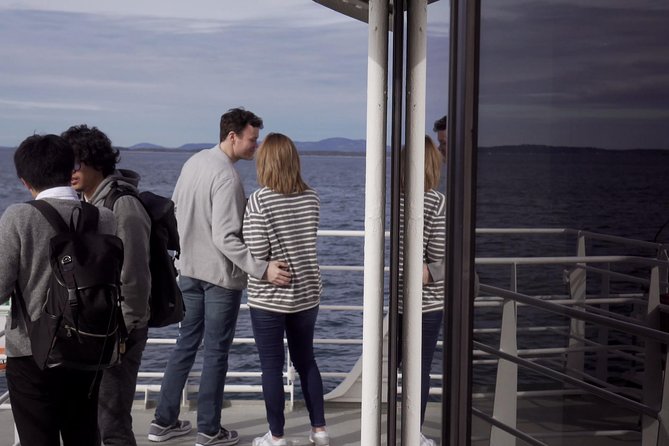
This is an international trip, even though it’s “just a ferry,” so your documents matter.
You’ll need one of the following to cross the US/Canadian border by sea:
- US Passport
- US Passport Card
- Enhanced Driver License (EDL) / Enhanced ID Card (EDL/ID)
Important nuance: a Passport Card or EDL/ID are not valid for air travel, which matters if you’re mixing modes.
Also, booking confirmation requires you to advise your citizenship and provide passenger details (full names and dates of birth) exactly as they appear on passports.
One more rule to take seriously: a person with a felony may be denied entrance into Canada, and a DUI is considered a felony in Canada. I know that sounds heavy, but it’s the kind of line you only want to learn about after the border, which is exactly when you don’t want to find out.
Small print: carry-on limits, bikes, dogs, and a passenger-only ferry
This ferry is passenger-only. Autos and other vehicles aren’t allowed, so you’re planning a light, luggage-focused trip.
You’re permitted 1 small carry on. Checked luggage is allowed for an added fee ($20.00 per piece), but if you can avoid checking bags, your day stays smoother.
Bikes and dogs have restrictions. If you need either, you must advise at booking so they can apply the correct rules. This is one of those situations where “I’ll ask later” can turn into a problem.
Most travelers can participate, and the service allows service animals, but the goal is always the same: keep the ferry schedule clean and safe for the main passenger flow.
Should you book this Seattle to Victoria one-way ferry?
I’d book this if you want a fast, direct link between cities and you like spending part of the trip looking out the window instead of sitting in traffic. The downtown arrival at Belleville Terminal is a big deal, because it turns your ferry day into a real Victoria day.
I’d also consider it if you’re traveling as a couple, solo, or with family and you’d rather not deal with the logistics of driving and parking. The onboard experience is built around passengers, with helpful staff, duty-free shopping, and food available when you want it.
The main reason not to book: if your schedule is too tight to tolerate change. The experience requires good weather, and if it’s canceled due to poor weather, you’ll be offered a different date or a full refund. So if you have a hard, non-flexible plan the moment you land, add a little padding.
If you’re flying-thin on luggage and you keep an eye on documents, this ferry is a smart, efficient way to get to Victoria.
FAQ
How long is the Seattle to Victoria one-way ferry?
The ride is approximately 3 hours.
Where do I board and where does the ferry arrive?
You depart from 2701 Alaskan Wy, Seattle, WA 98121 and arrive at Belleville Terminal, 254 Belleville St., Victoria, BC V8V 1X2 in Victoria’s Inner Harbour.
Is this a passenger-only ferry or can I bring my car?
It’s a passenger-only ferry service. Autos are not allowed.
Do I need a passport to cross into Canada by ferry?
Yes. A US Passport, Passport Card, Enhanced Driver License, or Enhanced ID Card (EDL/ID) is required to cross by sea. (A Passport is required for air travel; Passport Card/EDL/ID are not valid for air travel.)
What baggage can I bring?
You’re allowed 1 small carry on. Checked luggage is available for $20.00 per piece.
Is food and drink included in the ticket?
No. Food and drinks are not included, and alcoholic drinks are available to purchase.
Is duty-free shopping available onboard?
Yes. You have access to duty-free shopping because you’re traveling from the US to Canada.
Are there seat upgrades?
Yes. Vista and Comfort class seating are available for an upgrade. Contact the tour provider for pricing and availability.