REVIEW · COPENHAGEN
Walk & Canal Tour: Copenhagen Highlights + Changing of the Guards
Book on Viator →Operated by Go like a local · Bookable on Viator
Copenhagen can feel like a maze on day one, so this walk plus ferry tour is a smart shortcut. You start right at Copenhagen Central Station, stitch together key sights through central districts, then finish with the daily Changing of the Guards at Amalienborg. I like the tight 3-hour format (so you still have time for Nyhavn after) and I like that the tour is small, capped at 15 people, which keeps it easy to ask questions. One thing to consider: the canal ferry can be full or canceled, and on those days the route may change and your timing for a specific stop can be less predictable.
I also like how the tour mixes Denmark’s big “story” places with everyday Copenhagen texture. You get royal and political landmarks at Christiansborg, art and architecture at the Glyptotek and Black Diamond, and then real waterfront views from the water. The big drawback is simply the walking: you should have moderate fitness, and if the ferry doesn’t run, you’ll walk farther.
In This Review
- Key highlights at a glance
- Starting in the right place: Copenhagen Central Station to Tivoli’s gate
- Tivoli and the Glyptotek: quick stops that tell you what Copenhagen values
- Christiansborg Palace to the Black Diamond: power, then modern culture on the waterfront
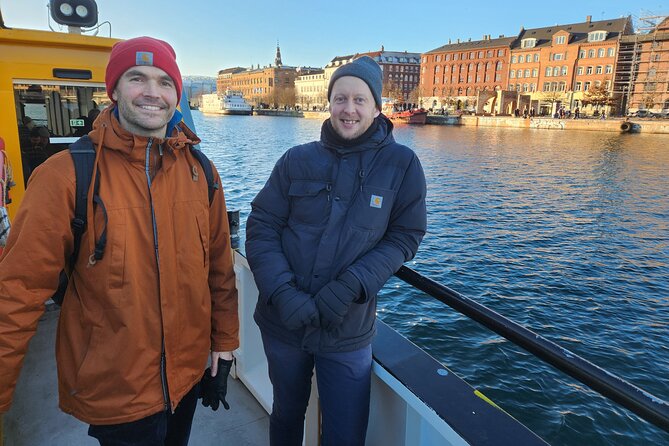
- The electric harbor ferry: the fastest way to see Copenhagen from the water
- Passing the Old Stock Exchange after its 2024 fire
- Nyhavn, the Little Mermaid, Gefion Fountain: iconic photos with actual stories
- Kastellet, Churchill Park, Marble Church: fortifications, myth, and a dome with patience
- Amalienborg Palace Museum area and the Changing of the Guards at 12:00
- What to expect: walking pace, group size, and weather-proofing your plan
- Is it worth $77.39? My honest booking advice
- Should you book this Walk & Canal Tour with the guards?
- FAQ
- How long is the tour?
- Where do you meet, and where does it end?
- How much does it cost?
- Is the tour in English?
- What size is the group?
- What’s included in the experience?
- Do you need to pay admission for everything?
- What time do you see the Changing of the Guards?
- Can you reserve seats on the ferry?
- How physically demanding is it?
Key highlights at a glance
- Copenhagen Central Station meeting point: easy to find, classic local “start here” vibe
- Small group size (max 15): better pace control and more time for questions
- Electric harbor ferry on public waterways: great views, but seats can’t be reserved
- Amalienborg endings timed to guard changes: full 12:00 ceremony on the morning tours
- A compact hit-list of iconic stops: Tivoli area, Christiansborg, Black Diamond, Nyhavn, Little Mermaid, Kastellet, Marble Church
Starting in the right place: Copenhagen Central Station to Tivoli’s gate
You begin at Copenhagen Central Station, meeting inside the main hall near the big round analog clock by the 7‑Eleven. If you’re arriving from anywhere else in the city, this is one of the easiest places to orient yourself—train, metro, and buses all feed into it. The guide sets the tone fast, giving context for the city beyond postcard facts, so the rest of the day connects.
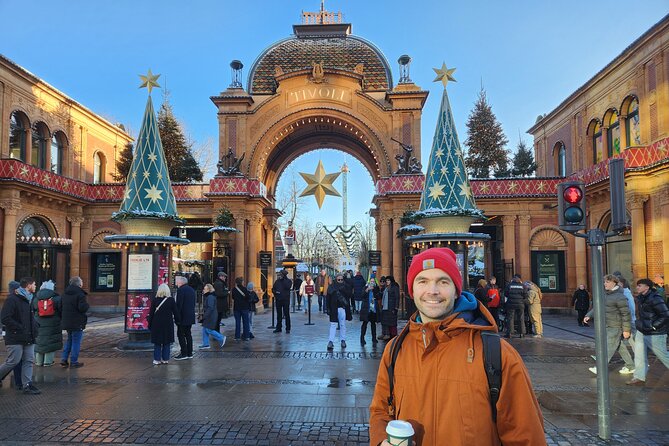
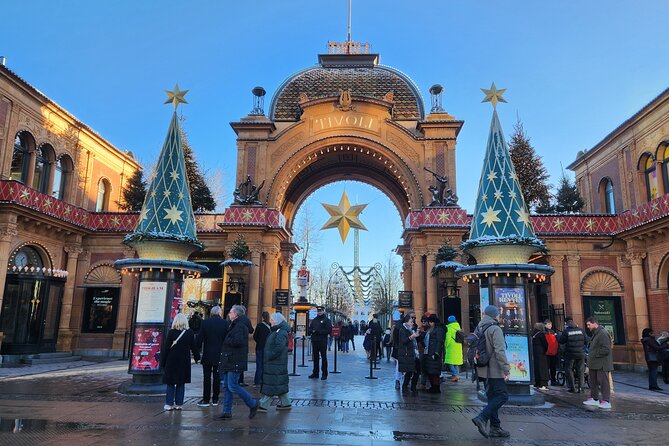
From there, you head toward the Tivoli Gardens area for a short look outside. You’re not going into the park here, but you do get a sense of why Copenhagen locals treat Tivoli like more than a theme park—think design, creativity, and that distinctly Danish idea of making joy part of daily life.
Why this start works: you’re not wasting the first hour trying to figure out where to walk. You’re also seeing the “old Copenhagen” signal right away, before modern landmarks take over.
Tivoli and the Glyptotek: quick stops that tell you what Copenhagen values
Next up is Ny Carlsberg Glyptotek (Glyptoteket). It’s another outside stop, focused on the building itself: the architecture and the famous glass dome you can see from street level. It’s one of those Copenhagen moments where the museum is almost a preview of what you’d feel inside—light, elegance, and a little theatrical.
The tour’s pacing here is practical. You get enough time to see the façade clearly and learn what the place represents, but you’re not bogged down with tickets or long museum time. That matters because the rest of the day stacks up with city powerhouses: Christiansborg, the waterfront, and royal sites.
If you love art and museums, you may want to come back later for a deeper visit on your own. But as a “get oriented” tour, these short pauses do their job.
Christiansborg Palace to the Black Diamond: power, then modern culture on the waterfront
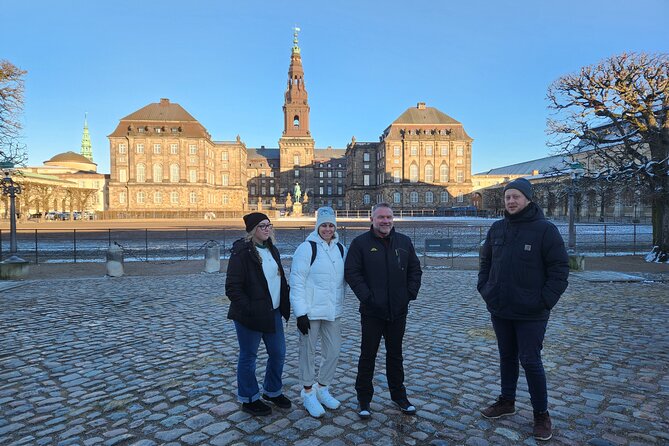
Christiansborg Palace is where the tour shifts into Denmark’s governing center. You hear how the site has shaped Danish life for centuries, including the fact that it’s burned down multiple times and rebuilt again in each era. Today it’s tied to the Danish Parliament and the Supreme Court, plus royal reception rooms—so it’s royal tradition and modern government in one place.
From there, you reach the Black Diamond (Det Kgl. Bibliotek) on the waterfront side. This stop is about modern Copenhagen culture: sleek black granite reflecting the harbor, plus a strong link to books, learning, and local events. The best part for many people is the location; even if you’re not going inside, you can feel the library’s “city living room” role.
Then comes the bridge to the water. You move toward boarding the electric harbor ferry, and that’s where the day starts to look like Copenhagen from a new angle.
The electric harbor ferry: the fastest way to see Copenhagen from the water
This experience includes a short canal and harbor tour on an electric ferry. The big win is viewpoint: from the water you get clean angles of places you usually view from the street—like the Opera House and Amalienborg Palace—plus colorful waterfront scenes and houseboats near canals most visitors miss.
On weekdays, the ferry can be surprisingly peaceful, and you might even have more space than you expect. But there’s a real operational detail you should know: it’s part of the public network, so seats can’t be reserved. On weekends it may be full, and in some cases the ferry can be canceled.
If the ferry doesn’t work that day, the plan shifts into a scenic walk. The trade-off is distance: you may walk about 6–7 km instead of 5 km, and you could lose time for a specific waterfront landmark.
Passing the Old Stock Exchange after its 2024 fire
As you ride along, you pass Børsen (the Old Stock Exchange), famous for its dragon-spire roof with intertwined dragon tails rising upward. It’s exactly the kind of Copenhagen detail that’s hard to spot when you’re rushing on foot.
The tour also includes a key piece of context: in April 2024, a major fire severely damaged the building, and restoration work is underway. Even if you’ve never cared about old finance buildings, this stop lands because it connects architecture with real city life—how Copenhagen treats its historic structures like something worth saving, not replacing.
It’s a quick moment, but it adds weight to the skyline view.
Nyhavn, the Little Mermaid, Gefion Fountain: iconic photos with actual stories
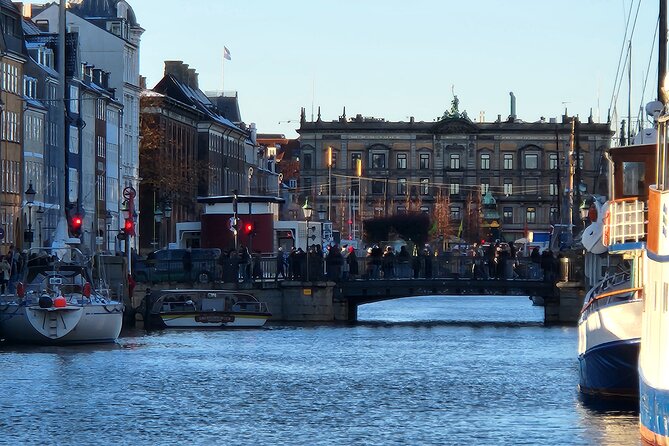
The canal cruise gives you a brief pass by Nyhavn, Copenhagen’s most famous harbor stretch—colorful 17th‑century buildings, waterfront cafés, and that classic “reflections on water” look. From the ferry, it’s one of the easiest places to understand why artists and writers kept returning to this spot.
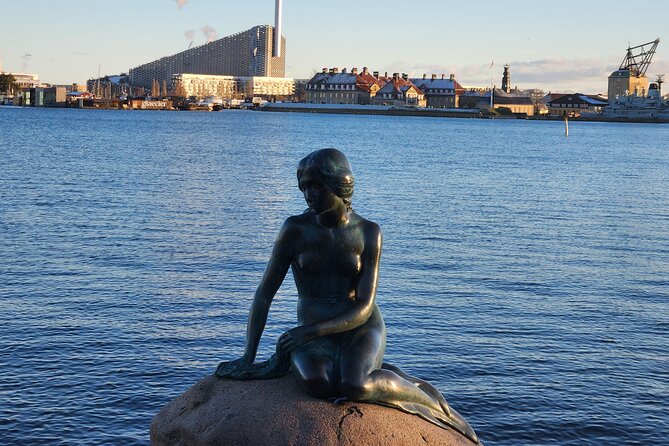
Then it’s time to visit The Little Mermaid. You’ll hear the story behind Hans Christian Andersen’s fairy tale and how the bronze statue became a symbol tied to Denmark and the sea. Whether you’re a myth person or not, this stop is worth it because it’s anchored in the city’s identity, not just tourism.
After that, you walk to Gefion Fountain. It’s a standout because it’s not random decoration—it connects Norse mythology to the harbor area. The guide shares the legend of Gefion, who (in the story) plowed Zealand from Sweden with four oxen, and you see the bronze figures and cascading water right by the promenade.
One practical note: the Little Mermaid and Gefion area can get busy, and your exact timing can shift if the ferry can’t run as planned.
Kastellet, Churchill Park, Marble Church: fortifications, myth, and a dome with patience
A big part of what makes this tour feel more than basic highlights is the fortress stop. You visit Kastellet, a well-preserved star fortress built in the 1600s. Even better, it’s not a dead site—it’s still an active military area, so it feels both historical and real. You’ll walk along ramparts and cobbled paths and see the windmill and red-brick barracks, with swans in the moat being a common sight.
Nearby, you stop at Churchill Park, dedicated to Danish resistance fighters from World War II. It’s a calmer pause—memorials and sculptures—right in the middle of one of Copenhagen’s most atmospheric waterfront-and-fortress zones. If you want one “breathing space” moment during the day, this is it.
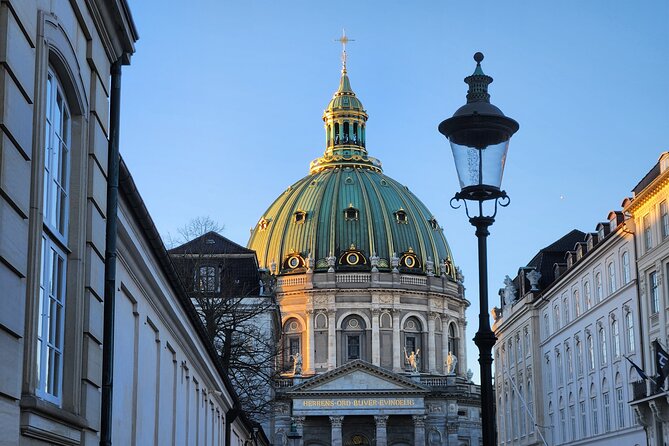
Then you reach Frederiks Kirke (Marmorkirken), the Marble Church. It took a long time to build, officially completed in 1894 after more than 150 years. The tour also points you toward views that line up with Amalienborg Palace, because the city makes strong visual connections if you know where to look.
Amalienborg Palace Museum area and the Changing of the Guards at 12:00
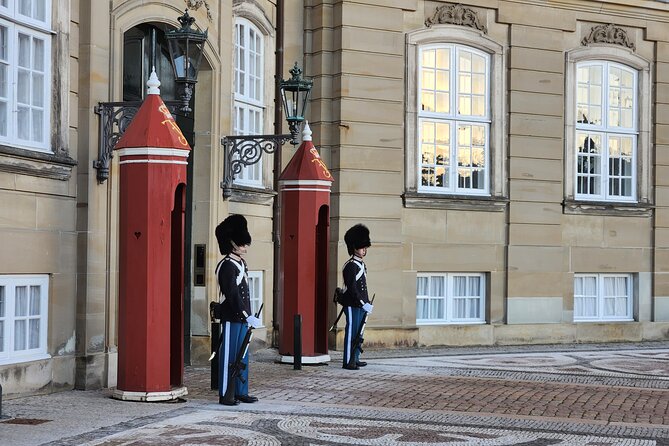
The emotional finish is Amalienborg Palace—the official residence area for the Danish royal family since 1794. The palaces here are four identical Rococo-style buildings arranged around an octagonal courtyard, and the equestrian statue of King Frederik V anchors the space.
During the walk around the area, you’ll also learn about how the changing of the guard works and why it matters as a public ritual. Right at 12:00, you can catch the daily ceremony in full.
Here’s the timing detail that actually helps you plan your day:
- If you join the 09:00 or 09:30 departures, the tour is designed so you arrive for the full Changing of the Guards at 12:00.
- If you join the 11:00 or 13:00 departure, the tour ends at the same location, where you’ll see a smaller, quieter guard change as the shift relieves the old.
That makes a difference. The full ceremony tends to be what most people picture, while the later timing is more intimate and less “grand production.”
What to expect: walking pace, group size, and weather-proofing your plan
This is a walk-first experience with a short ferry ride. With only about 3 hours total, the pacing is brisk but not frantic—small group size (max 15) helps a lot. There are built-in short stops, so you’re not constantly moving for long stretches, but you should expect to keep your shoes on for most of the day.
Weather in Copenhagen can swing. If it’s cold or wet, plan to layer and bring rain protection. One of the practical strengths of the tour format is that even in bad weather, the guide can keep you moving between sights without losing the story thread.
Also be realistic about crowds. The waterfront highlights and the Amalienborg area are popular, and your guide helps keep the group positioned for better sightlines.
Is it worth $77.39? My honest booking advice
For $77.39 per person and about 3 hours, I think the value is solid if you want orientation plus iconic sights in one go. You’re not just paying for views—you’re getting the narrative thread that explains what you’re looking at, from Danish government at Christiansborg to the royal ritual at Amalienborg.
The ferry part is where you get a lot of bang for your time. From street level, getting the same sweep of viewpoints takes longer. The only reason I hesitate is the operational variability: the electric ferry is public, can be full on weekends, and can be canceled. If your main goal is the water-based sequence, that’s the one risk.
If you’re booking for a first day in Copenhagen, this tour makes sense. You’ll finish near areas that are easy to explore afterward, since the end point is Amalienborg Slotsplads, a short walk from Kongens Nytorv and Nyhavn.
Should you book this Walk & Canal Tour with the guards?
Yes—if you want a compact Copenhagen plan and you care about finishing with a real daily ceremony. This tour is especially good for:
- Your first day in town and you want quick city bearings
- Anyone who likes architecture and symbols (palaces, domes, fortresses)
- People who want waterfront views without spending half a day figuring out routes
Skip or adjust expectations if you’re traveling with very limited walking tolerance, because the day is built around walking. Also keep a flexible mindset about the ferry, since it can’t be guaranteed.
If you’re the type who likes to leave Copenhagen with a sense of how the city works—power, art, myth, and daily life together—this is a smart, well-paced way to do it.
FAQ
How long is the tour?
It lasts about 3 hours.
Where do you meet, and where does it end?
You start at København H, Bernstorffsgade, 1651 København, Denmark. You end at Amalienborg Slotsplads, København, Denmark.
How much does it cost?
The price is $77.39 per person.
Is the tour in English?
Yes, it’s offered in English.
What size is the group?
The tour has a maximum of 15 travelers.
What’s included in the experience?
You get a small-group walking tour plus a canal and harbor tour on an electric ferry, and you finish with Amalienborg’s Changing of the Guards (full ceremony or smaller change depending on departure time).
Do you need to pay admission for everything?
Not everything includes admission. The short stops at places like Tivoli Gardens, Ny Carlsberg Glyptotek (Glyptoteket), and the Amalienborg Palace Museum are listed as not included, while several stops indicate admission ticket free.
What time do you see the Changing of the Guards?
The full Changing of the Guards at 12:00 is timed for the 09:00 and 09:30 tours. The 11:00 and 13:00 tours end at the same location for a smaller, quieter guard change.
Can you reserve seats on the ferry?
No. It’s part of the public harbor and canal network, so seats can’t be reserved. On weekends it may be full or canceled.
How physically demanding is it?
It’s designed for people with moderate physical fitness, since it’s largely a walking day.