REVIEW · SINGAPORE
Singapore to Batam:City Tour with Ferry Tickets & Lunch
Book on Viator →Operated by Solid Travel · Bookable on Viator
A full Batam day starts with one ferry ride. You’ll trade Singapore’s pace for a guided round-trip to Batam that bundles transport, included ferry tickets, and a packed mix of temples, bridge views, a mosque, and shopping. It’s built for people who want to get their bearings fast and make the most of limited time.
What I like most is the value bundle: ferry crossings plus air-conditioned bus time plus lunch plus admission fees for key stops. Second, I really appreciate how the day is structured around photo-friendly landmarks and quick cultural stops, so you’re not just sitting in transit all day. And yes, when the guide is on point, the whole thing can feel smooth and personal—names like Hendry, Mr Din, and Mr Winner come up for a reason.
One thing to consider: at this price and with a long list of stops, stop coverage can vary if the guide is less prepared or the group runs behind. Your best move is to stay alert to timing and ask clear questions early.
In This Review
- Key points worth knowing before you go
- How the Singapore–Batam ferry day works (and why it’s efficient)
- HarbourFront Centre check-in and boarding pass rules
- Temples and the Barelang Bridge photo moment
- Coffee, onde onde, coconut, and other food stops
- Batam Miniature House and Muhammad Cheng Ho Mosque
- Batik shopping, golden layer cake, and the mall option
- Price of $179: value, included fees, and what can affect quality
- Guide quality makes or breaks the day
- Should you book this Singapore to Batam city tour?
- FAQ
- What time do I need to meet?
- When does the ferry depart from Singapore?
- What time does the tour return?
- How long is the whole experience?
- What’s included in the $179 price?
- Is lunch included, and where do we eat?
- Do I need a passport copy?
- Where do I collect my ferry boarding pass?
- Is the massage included?
- How big is the group?
Key points worth knowing before you go
- Small-group size (max 15 people) keeps the experience more manageable than big coach tours.
- Ferry + bus + lunch are bundled, which helps the $179 price feel more justified.
- Temple/bridge/mosque mix gives you multiple cultural angles in one tight day.
- Coffee, snacks, batik, and layer cake turn “tour stops” into actual local taste moments.
- Shopping time is real, and the mall stop depends on extra time.
How the Singapore–Batam ferry day works (and why it’s efficient)
This is a one-day “Singapore-to-Indonesia” shortcut. You leave from HarbourFront in the morning, cross by high-speed ferry, then spend the day in Batam with an air-conditioned bus and a guide. The whole plan runs about 8 to 10 hours, which is exactly the kind of schedule that works when you only have a day to spare.
Batam is also close enough that you’re not stuck on a marathon trip. You’ll spend roughly one hour on the ferry ride each way, then the rest of the day is local driving plus short visits—ideal if you don’t want to build a whole second trip just to see a bit of another country.
HarbourFront Centre check-in and boarding pass rules
The day starts at HarbourFront Centre. You assemble there early, then collect your ferry boarding pass before departure. The specific collection point is Sindo Ferry (Harbourfront Centre).
If you booked with a Viator-style voucher, you’ll exchange a Viator receipt for the ferry boarding pass at that counter. One practical detail that matters a lot: you’ll need a passport copy for all travelers to get ferry ticketing sorted.
Plan for one more timing nuance: the meeting time is listed as 8:00 am, while the ferry departure is 9:00 am. Give yourself a buffer. Ferry days punish slow arrivals.
Temples and the Barelang Bridge photo moment
Batam’s day plan centers on landmark stops—mostly 60–90 minute blocks, with a few shorter ones later.
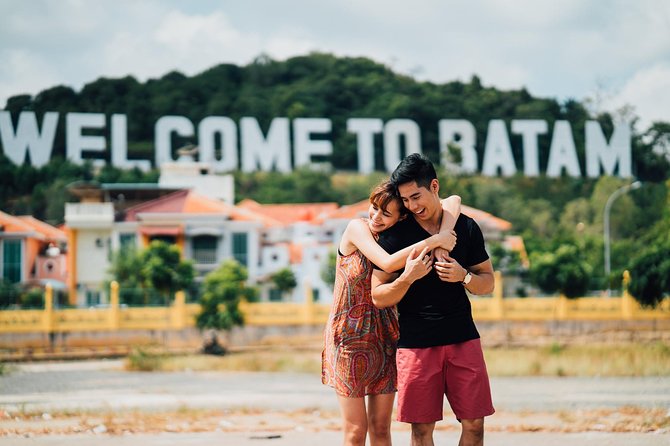
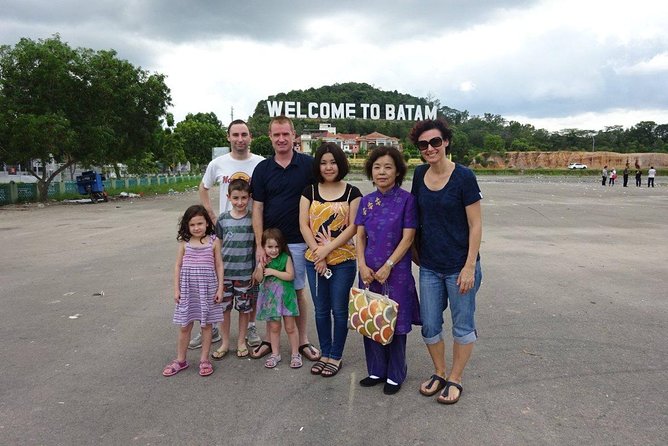
First, you arrive in Batam and do a quick “welcome” moment at the Welcome to Batam Monument. This is a classic group-photo stop—simple, quick, and a good way to break the travel energy.
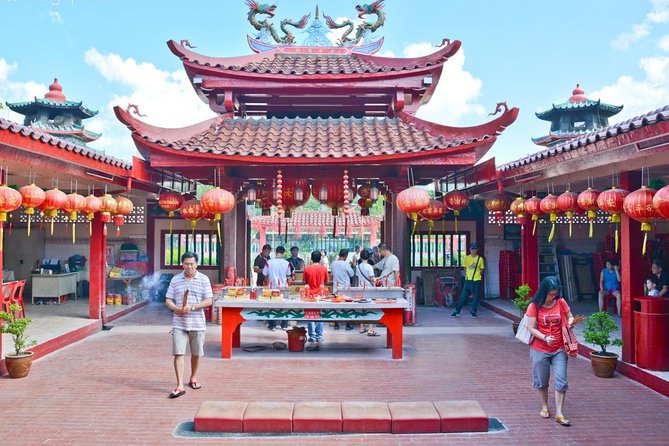
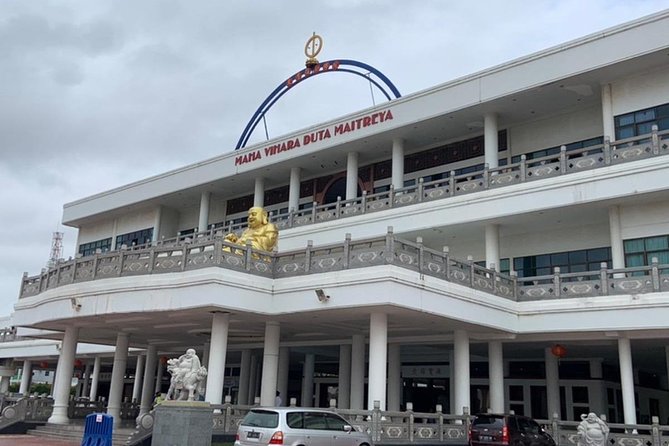
Next comes the big one: Maha Vihara Duta Maitreya Temple, described as the largest temple in South East Asia. This is your anchor stop, with about one hour on site. If you like places where architecture does the talking, this is the kind of stop that makes the day feel “real” instead of just a bus tour.
Then you roll into Barelang Bridge, the chain of six bridges connecting Batam, Rempang, and Galang. It’s built for photo ops, and the rhythm makes sense: you get views, you get a group snapshot, then you move on without losing the rest of the day.
After the bridge, the day shifts from “big landmark” to culture-and-everyday-life stops, which is where the experience often turns memorable.
Coffee, onde onde, coconut, and other food stops
This tour takes food seriously for a short schedule, and that’s a big part of the appeal.
At the temple/coffee portion, you’ll visit 70 Fahrenheit Koffie and learn about the history of coffee, with specific focus on Signatures Coffee of Indonesia and its claimed health benefits. Even if you’re not a coffee obsessive, this stop adds local context. It’s not just “walk around, take a photo, leave.”
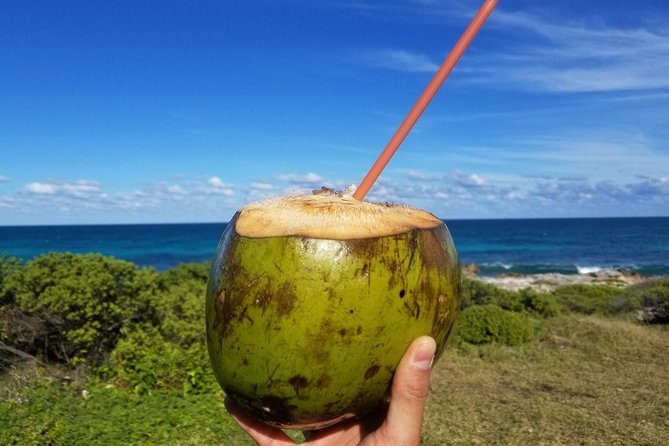
Then comes the street snack moment at Tua Pek Kong Temple (also known as Vihara Budhi Bhakti, and described as the oldest Chinese temple in Batam). You’ll be offered Indonesian street food such as onde onde and a refreshment of fresh coconut. It’s a practical break from temples—sweet snack, cold drink, back on the move.
Later in the day, you’ll also have a Golden Layer Cake tasting opportunity (listed as part of the shopping stretch). It’s not a full dessert adventure, but it’s enough to make shopping stops feel less like chores.
My takeaway: these food moments are short but intentional. They give you “local life” without turning the day into a culinary marathon.
Batam Miniature House and Muhammad Cheng Ho Mosque
After the temple and food stops, the tour keeps a steady pace with two culturally different visits.
Batam Miniature House is the quick one: about 30 minutes. Expect a collection of miniature traditional houses—more of a “watch, appreciate, move on” stop than a long sightseeing session.
Then you’ll go to Muhammad Cheng Ho Mosque for about 30 minutes. It’s described as a cultural acculturation mosque built with Chinese architectural style, blending nicely with Arabic-letter elements. If you enjoy architecture that mixes influences, this stop gives you a different angle than the purely temple-based part of the day.
There’s a pattern here: each site is short enough to keep the group moving, but different enough that you don’t feel stuck repeating the same “type” of place.
Batik shopping, golden layer cake, and the mall option
Shopping is baked into the day. It’s not a side quest.
You’ll stop at a Batik Factory Outlet (also referenced with a Batik Gallery shopping stop). The offering is described as authentic Indonesian batik and local-made handicrafts, plus souvenirs like decorative masks, bags, and wallets. There’s also a “try local” moment with Golden Layer Cake.
One note you’ll feel in real time: this is the part of the day where time can slip if you browse slowly. If you’re the kind of person who can handle shopping quickly, great. If not, set a simple plan for yourself—like one or two item categories you’ll buy, and a hard stop time before you start drifting.
The day ends with a drop-off at Mega Mall Batam Centre if there’s extra time available. It’s described as a popular shopping mall, but because the timing depends on how the day runs, don’t count on it as a guaranteed final stop.
Price of $179: value, included fees, and what can affect quality
Let’s talk about the $179 price in plain terms. What helps the value is the bundle:
- Round-trip high-speed ferry tickets between Singapore and Batam
- Air-conditioned vehicle in Batam (and during the day’s driving)
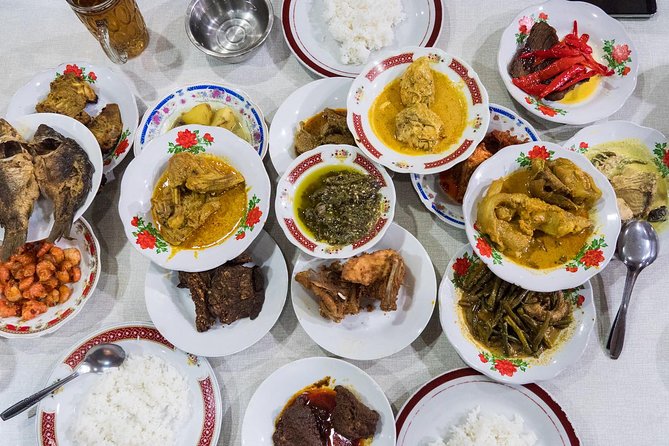
- Lunch included at a Nasi Padang restaurant stop (the lunch venue is listed as Sederhana Restaurant)
- Gratuities included
- Admission tickets included for most major stops (several locations explicitly show admission included)
If you tried to recreate this on your own, you’d likely spend a lot of effort coordinating ferry schedules, transport, guide time, and admissions. Here, you pay once and the day is structured for you.
Now the fair warning: your day is only as good as the execution. With a dense route, you’ll feel it if timing slips. Some people have had great days with guides who clearly know the flow and manage questions well—names like Hendry, Mr Din, and Mr Winner are mentioned for that kind of on-the-ground help.
If you want to protect value, do this before you get too far in: ask the guide early to confirm the full set of planned stops and the order. Keep an eye on time after each major visit. If you notice a stop getting skipped, you’ll have time to adjust your expectations right away.
Also, there’s an optional massage add-on mentioned for extra relaxation. It’s not presented as included, so if that’s a priority, ask how it fits into the day and what the add-on costs.
Guide quality makes or breaks the day
This tour can be excellent—or feel frustrating—depending on the guide’s preparedness and confidence. The best examples are the ones where the guide actively helps you understand what you’re seeing and keeps the group on track. In the good versions, guides like Hendry, Mr Din, and Mr Winner are described as friendly, helpful, and willing to go beyond the basics (including accommodations for small comfort requests like drinks).
In the weaker versions, the common pain point is simple: if the guide doesn’t follow the plan or doesn’t communicate clearly, you end up with gaps—fewer sights than expected and more waiting than you’d like.
So here’s my practical advice:
- In the morning, confirm the day’s stop order and how long you’ll spend at each place.
- After lunch and after Barelang Bridge, check in again on what’s still on the schedule.
- If shopping is a priority, decide what you want before you reach the batik and cake section—don’t let it become a last-minute scramble.
You can’t control every schedule factor. You can control whether you know where you stand at each stage.
Should you book this Singapore to Batam city tour?
Book it if you want a high-efficiency day: ferry crossing, air-conditioned driving, a mix of big landmarks and cultural stops, and lunch—all under the guidance of someone local. It’s especially good for first-time Batam visitors and for anyone with a short Singapore window who still wants a real taste of Indonesia beyond the obvious.
Think twice if you’re picky about sticking to a long list of stops, or if you hate shopping blocks. The price makes sense when the day runs well, but at $179, you want full coverage and clear communication. If that’s you, ask the guide early, watch the timing, and keep your plan flexible for the mall stop (since it depends on extra time).
If you’re ready for a structured, on-the-go day, this is a solid way to see Batam without needing extra nights or extra planning.
FAQ
What time do I need to meet?
You’re listed to start at HarbourFront with a meeting time of 8:00 am.
When does the ferry depart from Singapore?
The ferry departure is 9:00 am (GMT+8) from Harbourfront to Batam (Batam Center).
What time does the tour return?
You return on the 6:20 pm (GMT+7) ferry from Batam (Batam Center) to Harbourfront.
How long is the whole experience?
It runs about 8 to 10 hours.
What’s included in the $179 price?
Included are round-trip ferry tickets, an air-conditioned vehicle, lunch at the listed restaurant, and gratuities.
Is lunch included, and where do we eat?
Yes. Lunch is included, and the lunch stop is listed at Sederhana Restaurant (Nasi Padang Restaurant is referenced as the lunch inclusion).
Do I need a passport copy?
Yes. You need a passport copy for all travelers to get ferry ticketing.
Where do I collect my ferry boarding pass?
You collect the ferry boarding pass at Sindo Ferry (Harbourfront Centre).
Is the massage included?
There’s an optional massage add-on mentioned for extra relaxation, but it’s not shown as part of the included price.
How big is the group?
This activity has a maximum group size of 15 people.